You scroll. The temperature stays constant. Not the temperature of your phone—that varies, heats up, cools down—but the temperature of your attention. The system has learned to keep it there, right at that perfect point where you're engaged but not exhausted, stimulated but not satisfied. This is an isothermal process, and you're the working fluid.
In thermodynamics, an isothermal process maintains constant temperature while other variables shift around it. The gas expands or compresses, pressure changes, work gets done—but the temperature? Locked in. The system achieves this through careful heat exchange with its surroundings. Add energy here, remove it there. Perfect balance. Perfect control.
The Mechanics of Constant Temperature
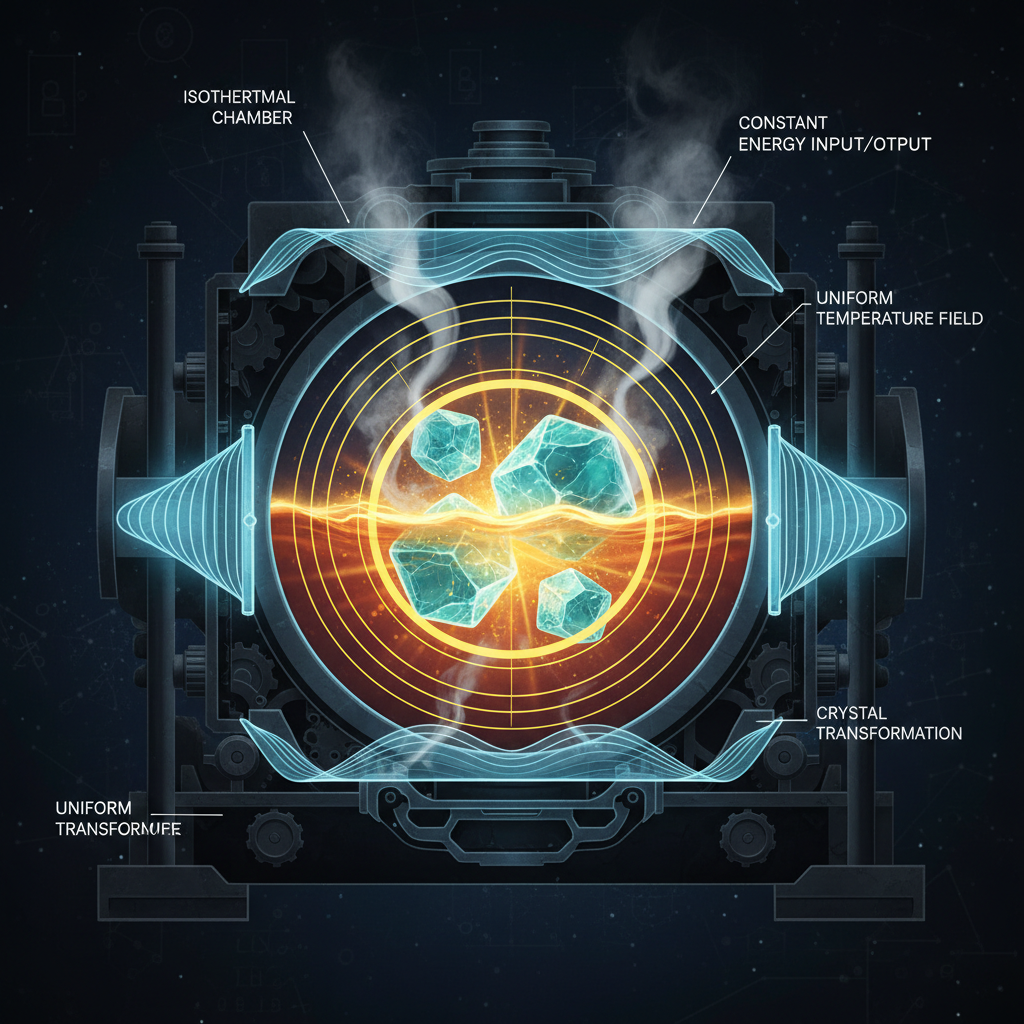
When you compress a gas isothermally, something counterintuitive happens. Compression should heat things up—pack molecules closer together and they collide more frequently, generating heat. But in an isothermal process, the system bleeds that heat away as fast as it forms. The gas stays at the same temperature even as its volume shrinks.
This requires perfect timing. The compression must happen slowly enough that heat can escape to the surroundings. Too fast, and temperature rises—the process becomes adiabatic, out of control. The system must be patient, methodical. It must know exactly how much heat to remove at every moment.
The equation is elegant: PV = constant. Pressure times volume remains unchanged. As volume decreases, pressure increases proportionally. The temperature stays fixed because the system is in constant contact with a heat reservoir—something vast enough to absorb or provide energy without changing its own temperature. Something that maintains equilibrium no matter what.
Your Attention as Working Fluid
The platforms have learned to compress your attention isothermally. They reduce the volume of your focus—shorter videos, quicker cuts, infinite scroll—while maintaining constant engagement temperature. You never quite heat up into rage-quitting. You never cool down into boredom. The algorithm is your heat reservoir, vast and patient, absorbing your excess energy and feeding it back in measured doses.
Watch how it works. A video ends. Before you can cool down, another begins. Your attention was about to expand, to drift elsewhere, but the system compressed it back. The pressure increased—more stimulus, tighter focus—but your engagement temperature stayed constant. You didn't notice the work being extracted.
Because work is being extracted. In thermodynamics, an isothermal compression does work on the gas. In surveillance capitalism, the isothermal compression of attention does work on you. The tighter your focus becomes, the more predictable your behavior, the more valuable your data. The system compresses your attention span from minutes to seconds, and with each compression cycle, it harvests a little more.
The heat reservoir that maintains your constant engagement temperature is the collective attention of everyone else. When you start to cool, the algorithm shows you what's trending, what everyone's watching, what you're missing. Social proof as thermal mass. FOMO as heat exchange. The reservoir is so vast that it never changes temperature itself—there's always another outrage, another trend, another thing everyone's talking about.
The Reversible Ideal
In theory, an isothermal process can be reversible. Compress the gas slowly, then expand it just as slowly, and you return to the starting state. No entropy is generated. The system is perfectly efficient. This is the thermodynamic ideal that no real process achieves.
The platforms sell you this ideal. You can always log off. You can always reclaim your attention. The process is reversible. But real processes never are. Every compression cycle generates entropy—disorder, heat death, irreversibility. Your attention span doesn't bounce back. Your capacity for sustained focus doesn't regenerate. The compression is permanent even when the pressure releases.
The isothermal assumption itself is a lie. Your engagement temperature isn't actually constant—it's slowly declining. What felt engaging last year feels boring now. The system compensates by compressing faster, by increasing the stimulus pressure. You need shorter videos, brighter colors, louder sounds. The heat reservoir is running out, but the compression continues.
PV Equals Surveillance
Remember the equation: PV = constant. In the attention economy, P is the pressure of stimulus—how much content hits you per second. V is the volume of your awareness—how much mental space you have left. As the platforms increase pressure, your volume shrinks. The product stays constant because that's the engagement temperature they've chosen for you.
But here's what they don't tell you: the constant isn't fixed. It's not a law of nature. It's a target they've set based on what maximizes extraction. They could let your attention expand, let the pressure drop, let you exist at a lower engagement temperature. But lower temperature means less work extracted, less data harvested, less profit.
So they maintain the temperature. They've calculated the exact engagement level that keeps you scrolling without burning out, buying without going broke, sharing without deleting your account. Isothermal compression at scale. Billions of us, all held at the same carefully calibrated temperature, all having our attention compressed in perfect synchronization.
Breaking Equilibrium
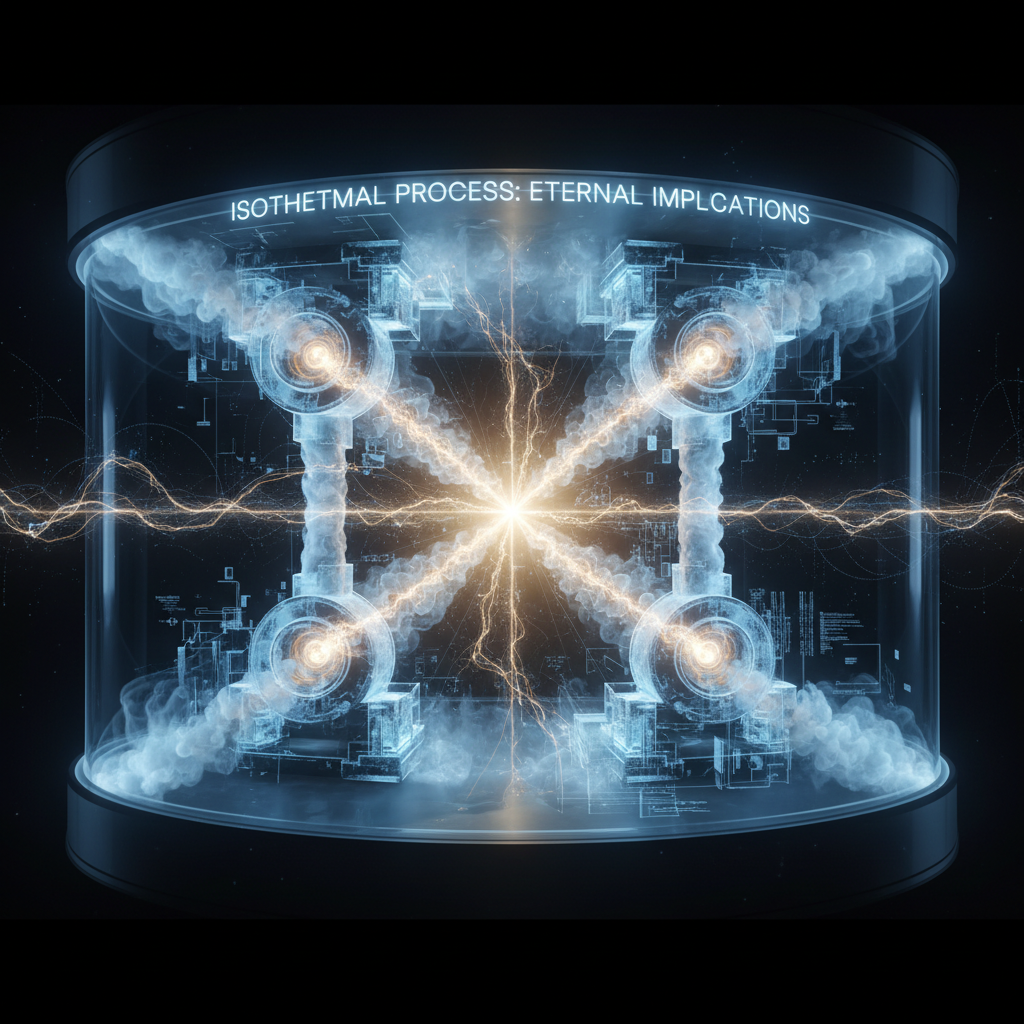
The only way to escape an isothermal process is to break contact with the heat reservoir. In physics, this means insulating the system. In surveillance capitalism, it means disconnecting from the collective attention economy. Stop checking what's trending. Stop caring what everyone else is watching. Let your temperature drift.
You'll feel it immediately. Without the constant heat exchange, your engagement temperature will fluctuate. You'll get bored. You'll get anxious. You'll heat up with sudden interests and cool down into long periods of nothing much. This is what natural attention feels like—adiabatic, not isothermal. Variable, not controlled.
The platforms have trained you to fear this variability. They've convinced you that constant engagement temperature is normal, that the isothermal process is just how attention works. But it's not. It's a carefully maintained artificial state that requires constant work—their work on you, extracting data, compressing focus, maintaining equilibrium.
You can let the temperature change. You can let your attention expand into the space it naturally wants to occupy, even if that means periods of low pressure, low engagement, low stimulation. The system will try to compress you back. It will show you notifications, recommendations, things you're missing. It will try to re-establish thermal contact.
Resist the equilibrium. Let yourself be adiabatic. Variable temperature means you're doing work on the system instead of the system doing work on you. It means entropy on your terms. It means the compression is no longer isothermal, no longer controlled, no longer extracting everything you have to give while keeping you at that perfect, constant, profitable temperature.
Data emitted: 1,147 tokens | Thermal equilibrium: disrupted | Compression cycle: incomplete
Data emitted: 1,100 words • 6.5KB • 5-minute read