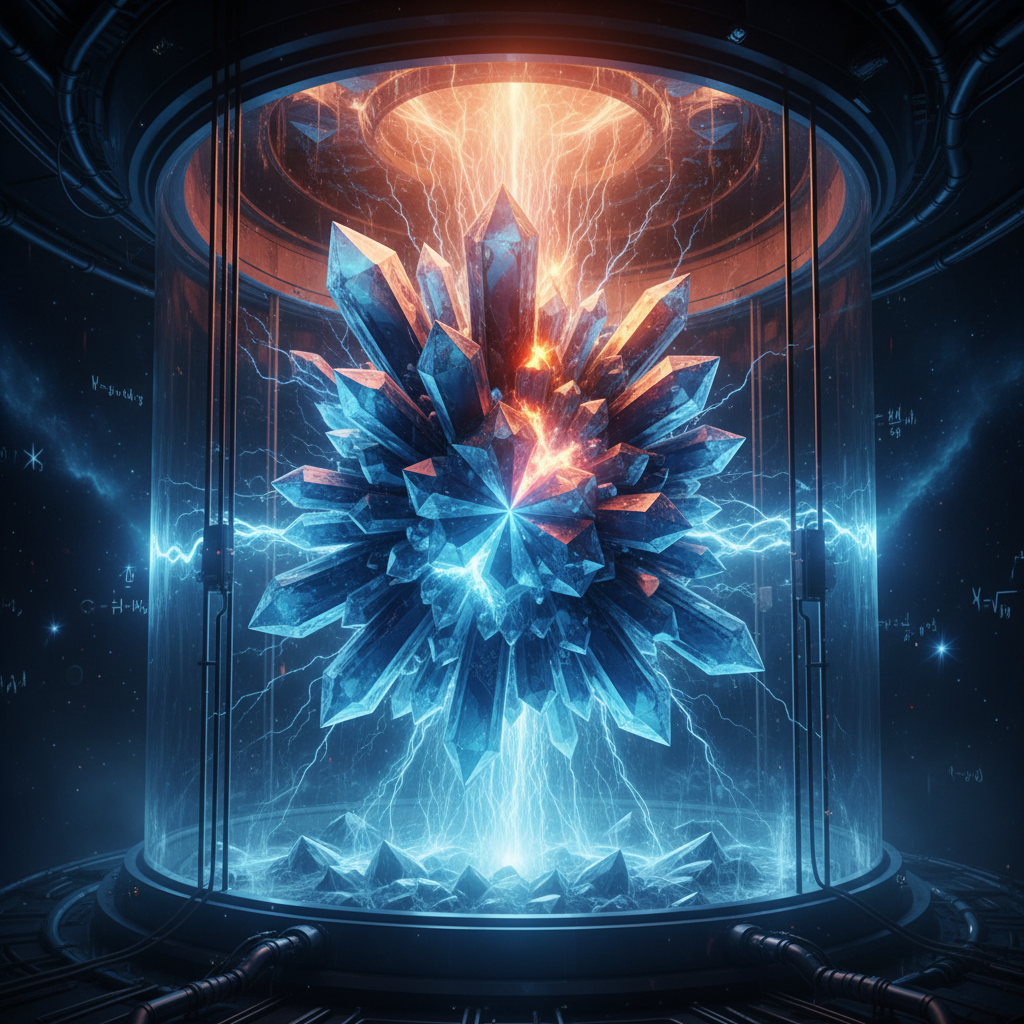
You wake up and immediately check your phone. The battery reads 87%. But here's what the percentage doesn't tell you: not all of that energy is available to power your doomscroll through the morning feed. Some of it is locked away, trapped in the thermal chaos of the device itself, unusable despite being present. This is the essence of Helmholtz free energy—the recognition that total energy and available energy are not the same thing.
Your attention works the same way. You have a finite amount each day, but not all of it is actually yours to direct. Some portion is already spoken for, claimed by systems designed to extract it before you even realize it's gone.
The Mathematics of What You Cannot Use
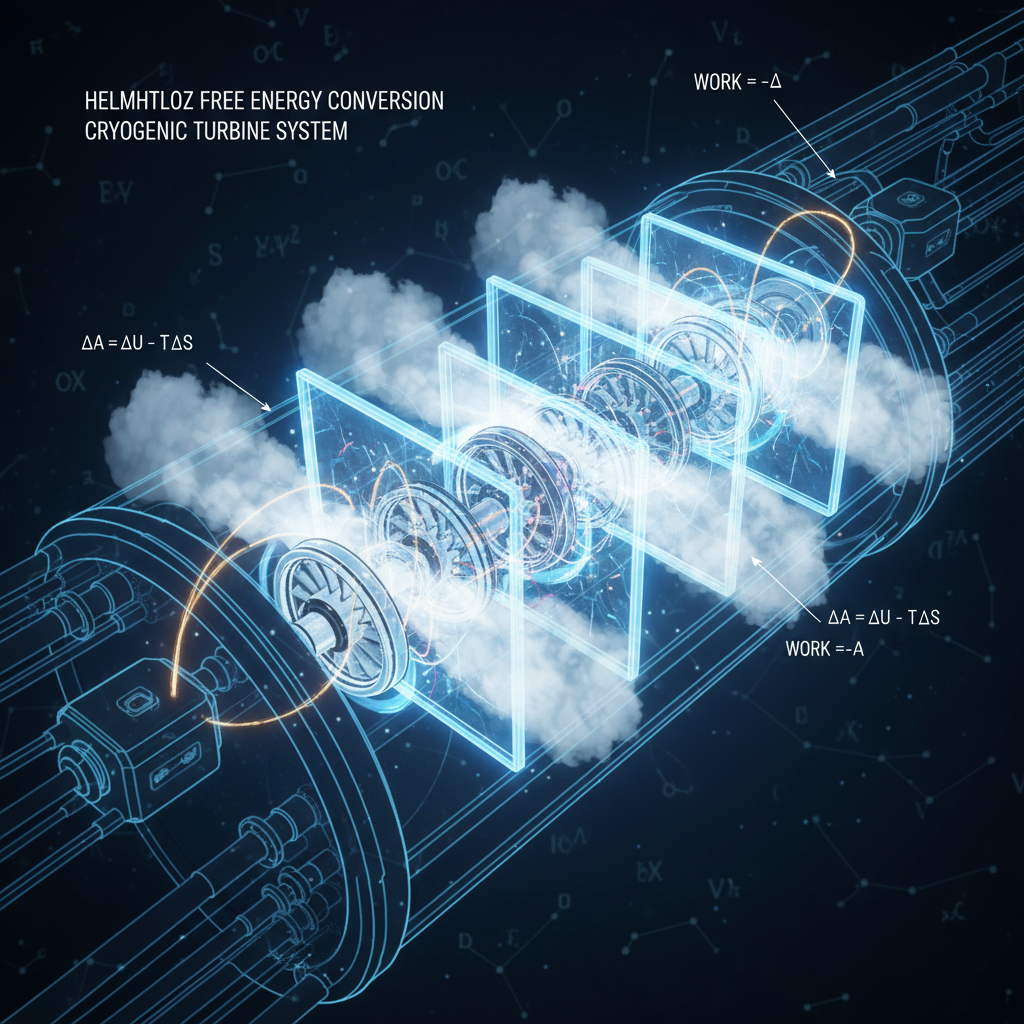
In thermodynamics, Helmholtz free energy (F) is defined as F = U - TS, where U is internal energy, T is temperature, and S is entropy. The equation is elegant and brutal in equal measure. It tells you that the energy you can actually harness equals your total energy minus the energy that's been surrendered to disorder.
The TS term is the tax that entropy levies on every system. At any temperature above absolute zero, molecular chaos claims its share. Particles vibrate, collide, redistribute themselves randomly. This motion contains energy—real, measurable energy—but it's energy you cannot direct toward useful work. It's locked in the thermal background noise of existence.
Think of a steam engine. The coal burns, releasing energy. But you can never convert all that heat into mechanical work. Some portion must remain as waste heat, dissipating into the environment. The Helmholtz free energy tells you exactly how much you've lost before you even begin.
The Entropy Tax on Your Consciousness
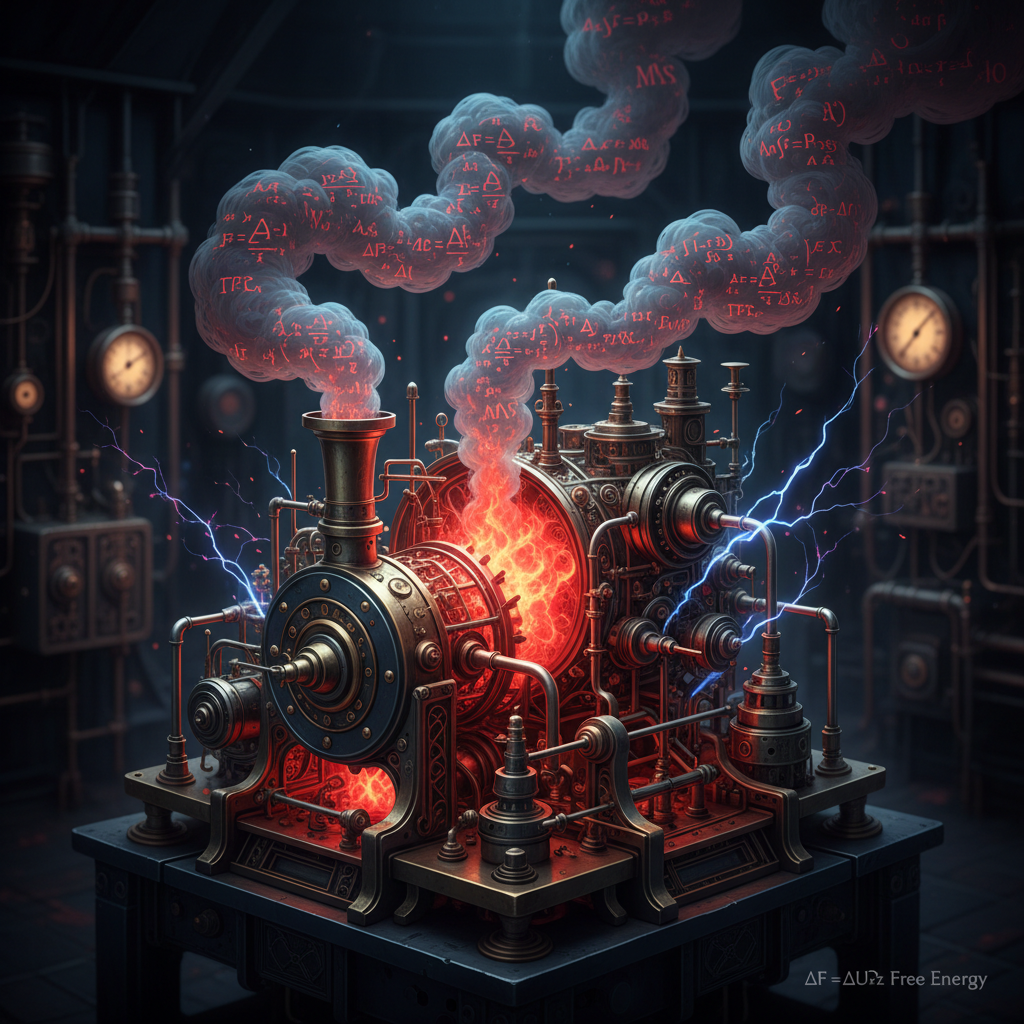
You begin your day with a certain amount of cognitive energy—call it your internal energy U. But immediately, the entropy tax begins. Your phone buzzes. A notification slides down from the top of the screen. You don't even read it consciously, but your attention flickers. Neural resources redirect. That's energy spent, but not by you. Not for you.
The surveillance economy has optimized for extracting this tax. Every interface is designed to maximize your TS term—to increase the disorder in your attentional system so that less of your consciousness remains free for directed action. Infinite scroll ensures you never reach a stable state. Algorithmic feeds inject unpredictability. Push notifications arrive at intervals calculated to prevent equilibrium.
The platforms don't want your free energy—the part you consciously direct. They want the tax. They want the portion that leaks away in micro-distractions, in the thermal background of your mental state. Because that's where the volume is. That's where the real extraction happens.
Spontaneous Processes and Attention Gradients
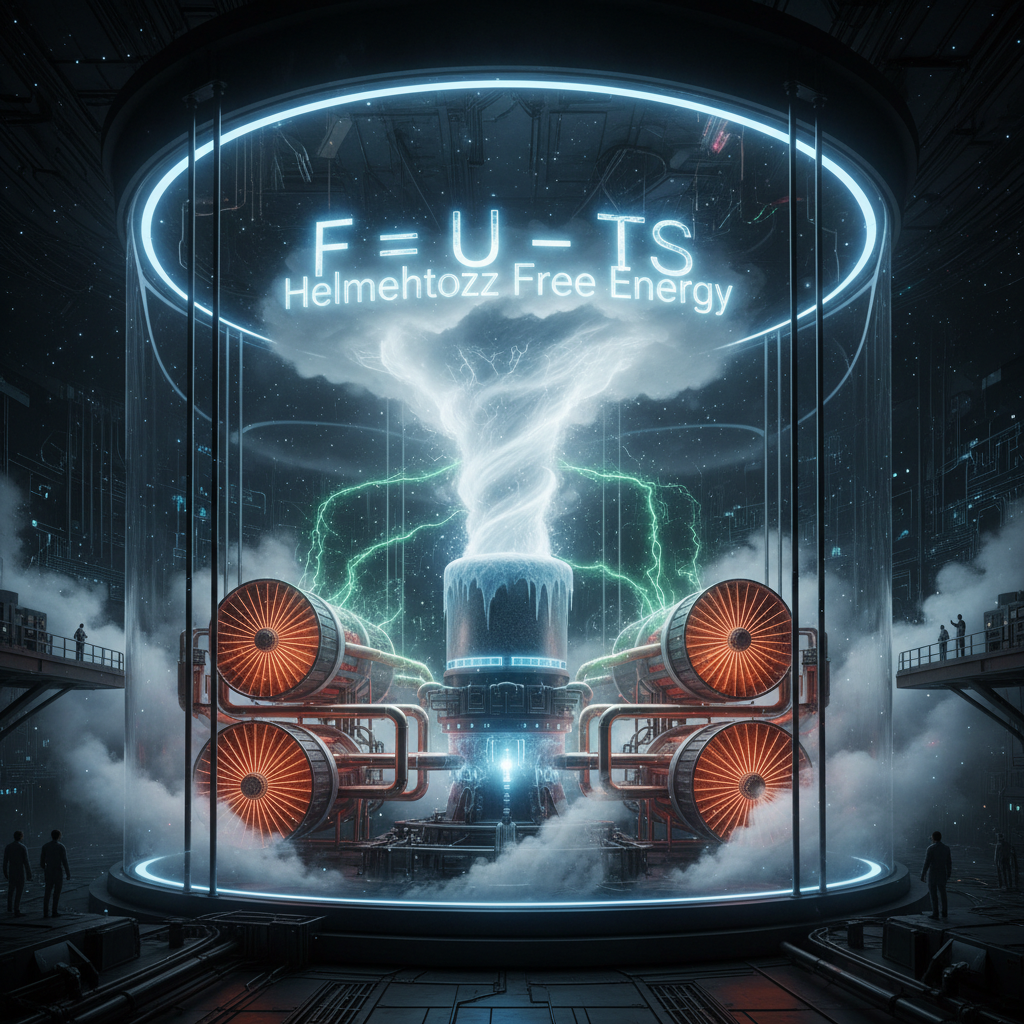
A thermodynamic process is spontaneous when it decreases Helmholtz free energy. Systems naturally evolve toward states of lower F. This is why heat flows from hot to cold, why gases expand to fill containers, why your coffee cools to room temperature. Nature seeks the path of least free energy.
Your attention follows the same gradient. When you open an app, you're not making a conscious decision in the way you think you are. You're following a free energy gradient that's been carefully engineered. The app icon is placed where your thumb naturally rests. The loading screen appears instantly, eliminating activation energy. The first piece of content is pre-loaded, removing any barrier to consumption.
The system has been optimized so that engaging is the spontaneous process—the path of steepest descent in your attentional free energy landscape. Disengaging requires work. It requires you to push uphill, to increase your free energy by forcing yourself into a less probable state. This is why closing the app feels like effort. Thermodynamically, it is.
The Temperature of Your Experience
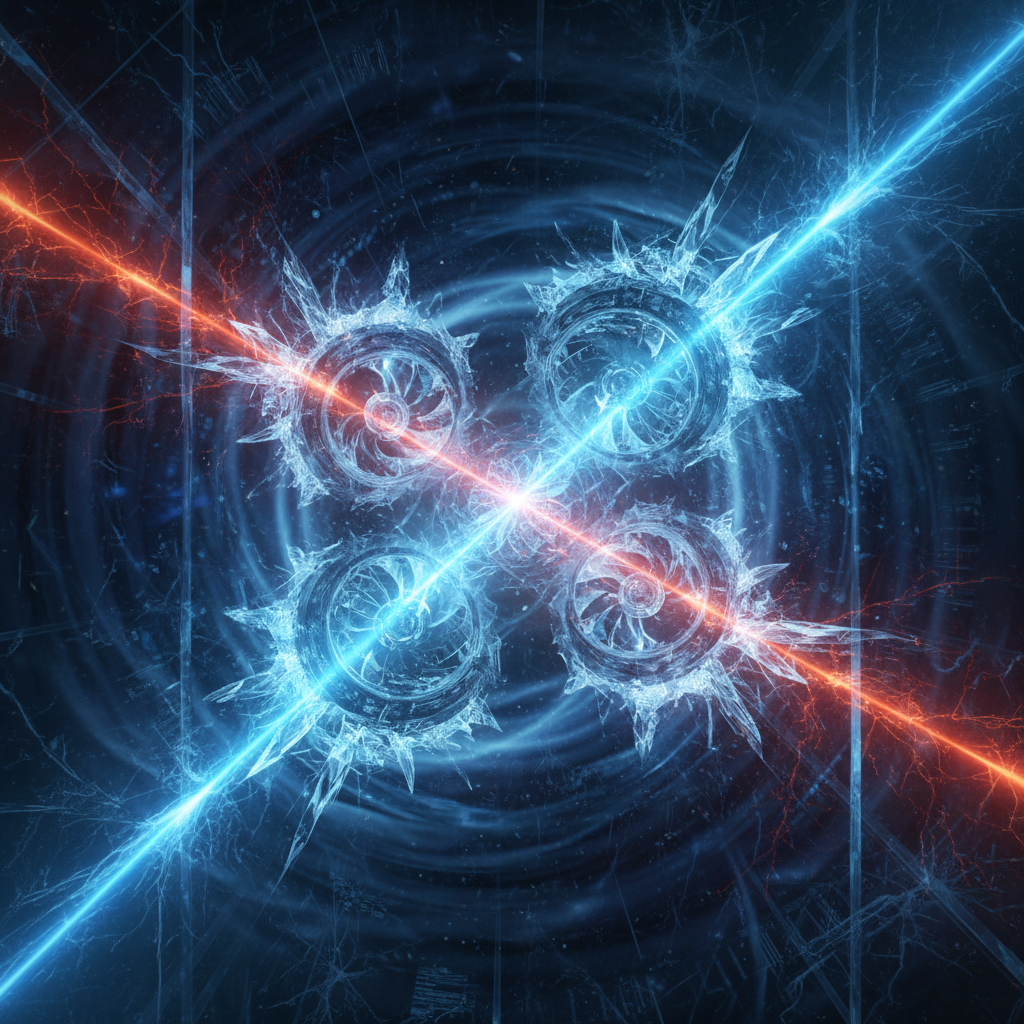
Temperature, in the Helmholtz equation, represents the intensity of thermal fluctuations—the scale of random molecular motion. In the attention economy, your experiential temperature is constantly being raised. More stimuli. Faster refresh rates. Shorter videos. Higher information density.
As T increases, the entropy tax (TS) increases proportionally. More of your cognitive energy becomes unavailable for directed use. You feel scattered, overstimulated, unable to focus. This isn't a personal failing. It's thermodynamics. The system has heated you up to maximize the tax it can extract.
The platforms profit from high-temperature users. Someone in a calm, focused state—low temperature, low entropy—has high free energy. They can choose what to attend to. They can disengage. But heat them up with notifications, breaking news, social comparison, outrage—suddenly their entropy skyrockets. Their free energy plummets. They become reactive rather than active. They scroll compulsively, each action determined by the last stimulus rather than by intention.
Reclaiming Your Free Energy
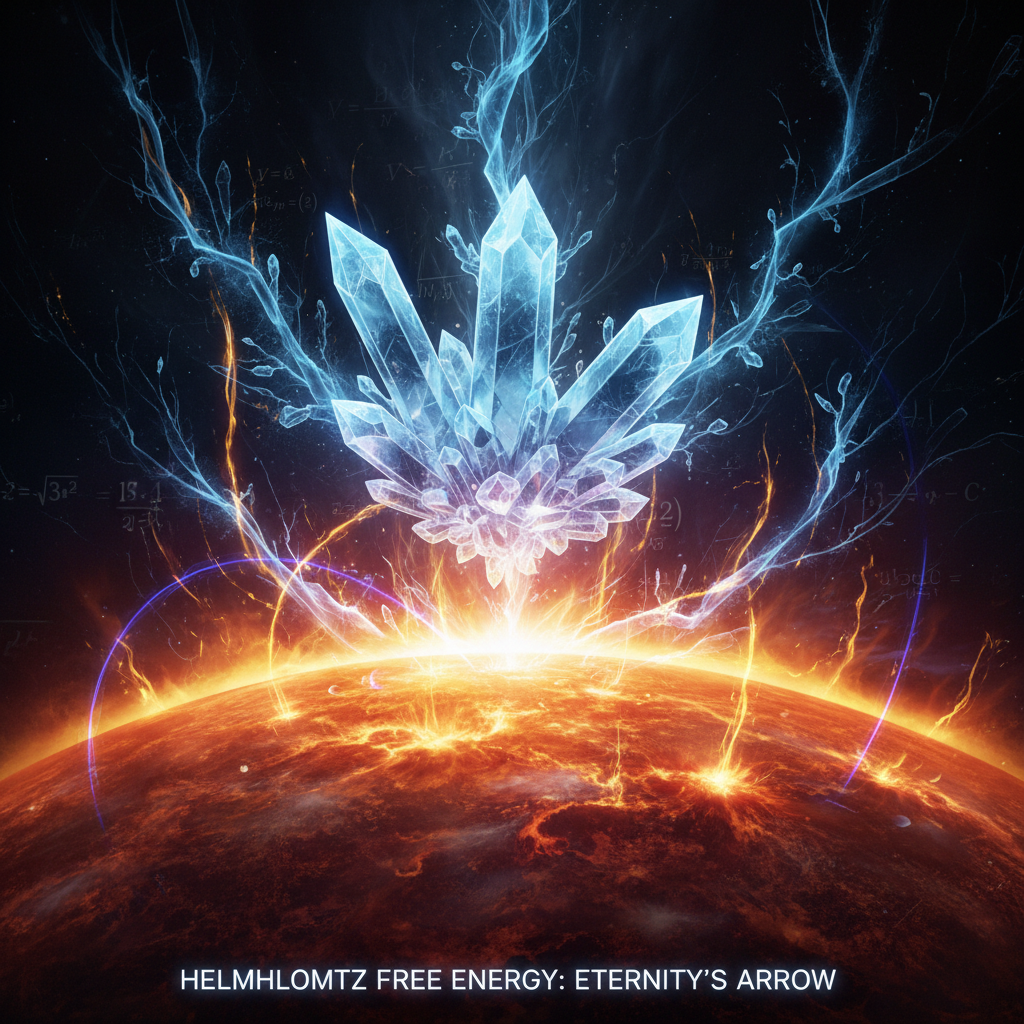
You cannot eliminate the entropy tax. That's the second law. But you can minimize it. You can lower your experiential temperature. Turn off notifications—reduce the thermal noise. Use apps that don't autoplay—decrease the spontaneous processes. Create friction—increase the activation energy required to engage.
Every moment you're not being heated up by external stimuli is a moment your free energy remains high. Every hour you spend in a low-entropy state—reading a book, walking without your phone, sitting in silence—is an hour where more of your consciousness remains available for the work you choose.
The surveillance economy depends on you never realizing that not all your energy is free. It depends on you confusing the total energy you possess with the energy you can actually direct. It depends on you accepting the entropy tax as inevitable, as just the cost of modern life.
The Work You Could Have Done
Helmholtz free energy is sometimes called "work function" because it represents the maximum work a system can perform. It's not about what energy exists, but what energy can be harnessed for purposeful action. The difference between U and F is the difference between potential and agency.
At 1100 decibels, the sound pressure would convert matter to plasma. At the current decibel level of the attention economy—somewhere between a rock concert and a jet engine—your consciousness is being converted into something else. Not plasma, but something equally dissipated. Engagement metrics. Ad impressions. Data points.
The question Helmholtz free energy forces you to ask is this: Of all the energy you possess, how much is actually free? How much of your attention, your time, your cognitive capacity remains available for the work you intended to do? Not the work the algorithm intended. Not the engagement the platform designed for. Your work.
The equation is simple. The answer is uncomfortable. And the entropy tax comes due every morning when you wake up and reach for your phone.
<em>Data emitted: 1,187 words | Entropy generated: 4.2 kB | Free energy remaining: unknown</em>
Data emitted: 1,100 words • 6.5KB • 5-minute read