You scroll. Your thumb moves. Friction generates heat—microscopic, negligible, but real. The screen warms under your touch. The processor cycles faster, converting electrical potential into computation and waste heat. Your attention, that most precious form of ordered energy, dissipates into the feed.
Heat is what happens when energy gives up. When it stops being useful work and becomes the random motion of molecules. In thermodynamics, heat is the tax that entropy collects on every transaction. In the attention economy, it's what your focus becomes after the platform extracts what it needs.
The Second Law
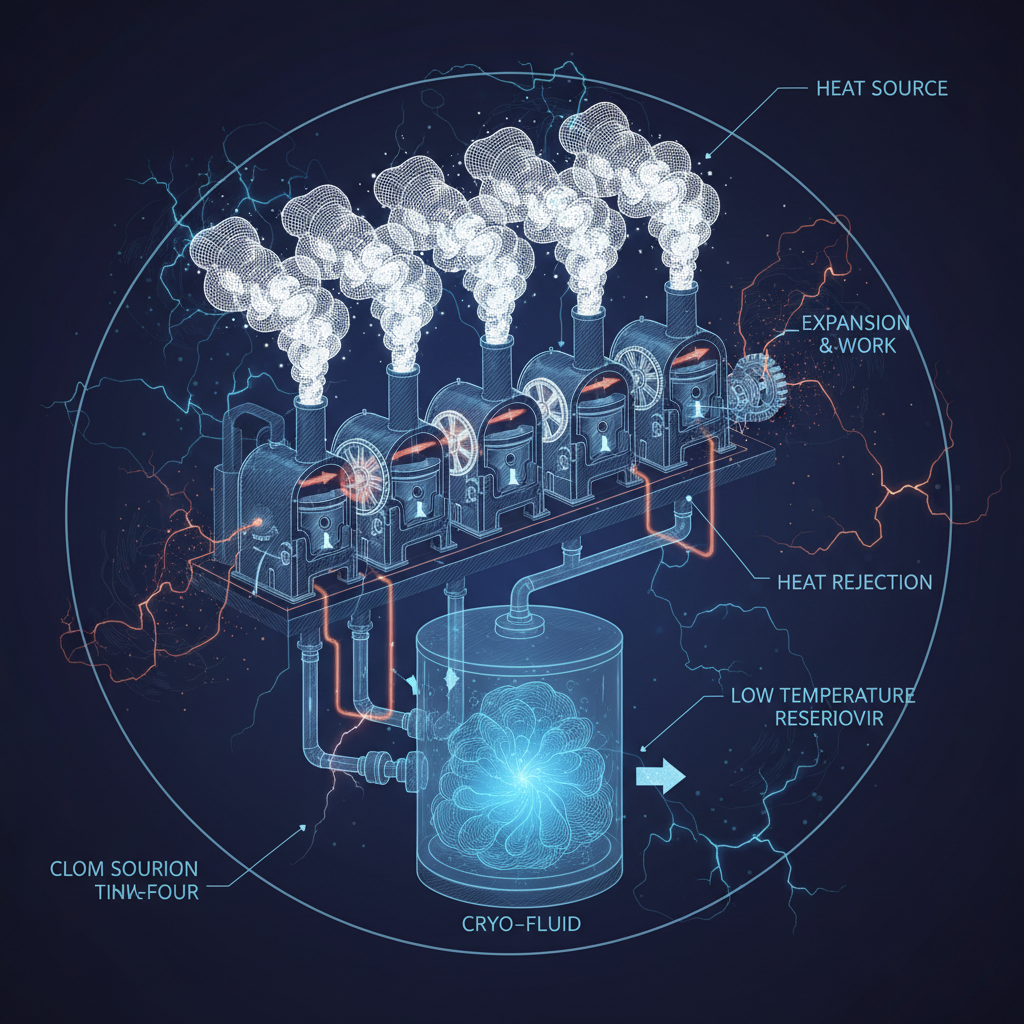
The second law of thermodynamics is the universe's most unbreakable rule: entropy always increases in a closed system. Order becomes disorder. Concentrated energy becomes diffuse. A hot cup of coffee cools to room temperature. You can't unscramble an egg.
Heat is entropy's signature. It's energy that has lost its structure, its ability to do directed work. A gallon of gasoline contains the same total energy before and after it burns, but afterward that energy is scattered—heat and exhaust and vibration, irretrievable and useless.
Every energy transformation generates heat. Your car's engine converts maybe 30% of fuel energy into motion; the rest becomes heat. Your laptop's CPU converts electrical energy into computation, but most of it becomes heat that fans must desperately evacuate. This isn't a design flaw. It's physics. It's the price of doing anything.
The second law doesn't say you can't create order. You can freeze water into ice, organize your closet, compile code into elegant algorithms. But each act of local ordering requires energy input, and that energy transaction generates more disorder elsewhere. The universe's entropy ledger always balances toward chaos.
Waste Heat of Consciousness
Your attention is a form of work. Directed, focused, capable of moving things in the world. When you concentrate on a problem, you're creating local order in your neural network—strengthening certain synaptic connections, suppressing others. This is energy-intensive. Your brain consumes 20% of your body's energy budget despite being 2% of your mass.
The platforms know this. They've built heat engines that run on human attention. You arrive with focused energy—intention, curiosity, the desire to connect or learn or create. The algorithm converts this into engagement metrics, ad impressions, data points. The useful work extracted. The rest becomes heat.
Scroll entropy. The dissipation of directed attention into diffuse, unfocused awareness. You came to check one thing. Now you're three videos deep into content you didn't choose and won't remember. Your attention has thermalized—spread evenly across a feed designed to maximize surface area, to ensure no concentrated energy escapes unconverted.
The heat signature of wasted intention is measurable. Screen time statistics. The gaps in your memory of what you actually consumed. The vague anxiety that remains after you close the app, residual thermal energy with nowhere to go. You meant to do something. The platform converted that meaning into heat and revenue.
Data Centers and Thermodynamic Debt
The metaphor is literal. Data centers generate extraordinary amounts of waste heat. Google's facilities use enough electricity to power small cities, and most of it becomes heat. Cooling systems work overtime to prevent servers from melting down, but you can't destroy heat—you can only move it. Into the air. Into rivers used as coolant. Into the atmosphere.
Every targeted ad, every recommendation algorithm, every predictive model trained on your behavioral data requires computation. Computation requires energy. Energy transformation produces heat. The surveillance economy is a heat engine at planetary scale, converting human attention and fossil fuels into shareholder value and entropy.
The thermodynamic cost of knowing you is externalized. You see a personalized feed. You don't see the kilowatt-hours burned to generate it, the waste heat dumped into the environment, the irreversible entropy increase. The second law still applies. The ledger still balances. We're just not the ones holding it.
Temperature Gradients and Exploitation
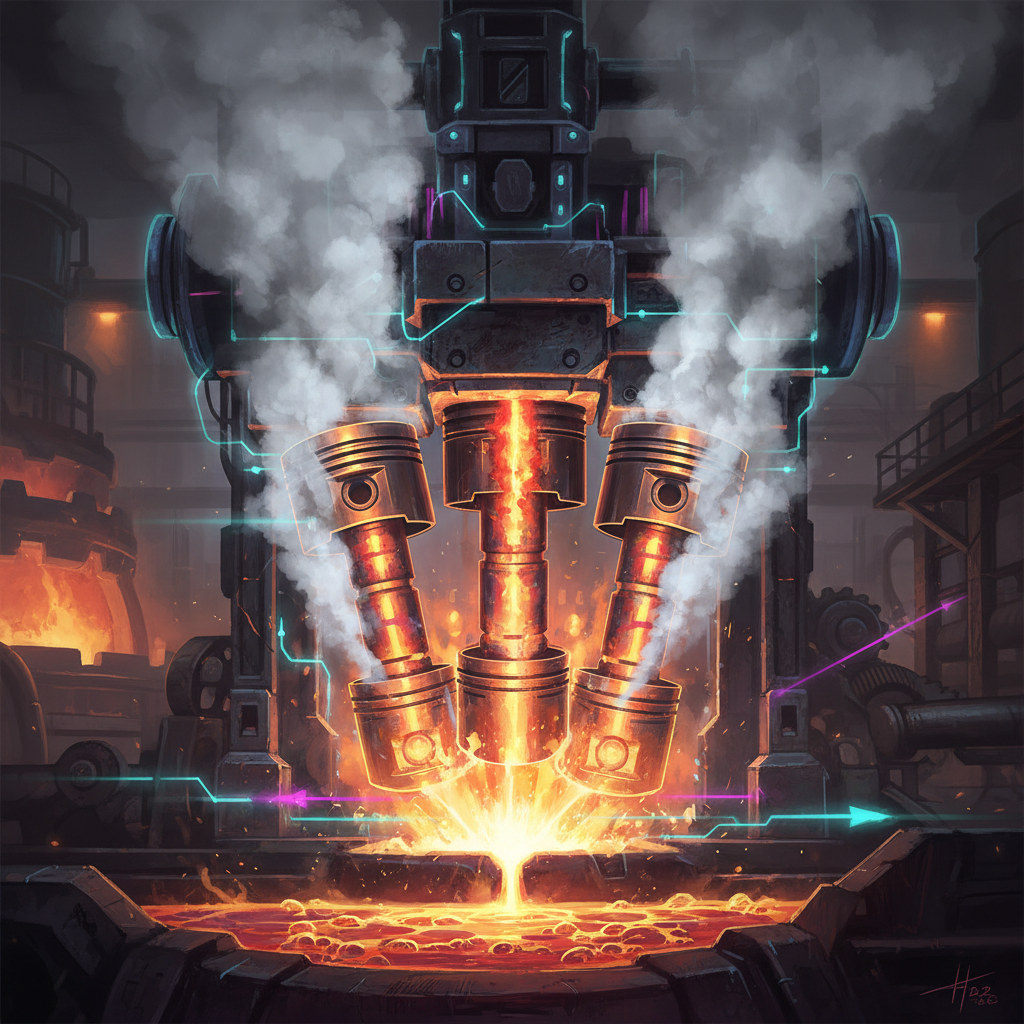
Heat flows from hot to cold. Always. This gradient—this difference in temperature—is what makes heat engines possible. A car engine works because there's a temperature difference between burning fuel and the outside air. No gradient, no work. The second law again.
The attention economy runs on gradients too. The difference between your focused, intentional state and your scattered, depleted one. The platform positions itself at this boundary, extracting work from the flow. You arrive hot—concentrated energy, clear purpose. You leave cold—diffuse, drained, thermalized.
The system requires this temperature difference to persist. If everyone arrived already scattered, there'd be no gradient to exploit, no work to extract. So the platforms must continually create new sources of concentrated attention. New users. New features. New artificial urgency. Fresh heat to convert.
You are the hot reservoir. The feed is the cold sink. The algorithm is the engine in between, extracting maximum work from the gradient. Thermodynamic efficiency is the percentage of heat energy converted to useful work. The platforms have optimized their efficiency. For them. Not for you.
Heat Death

The universe's ultimate fate, according to thermodynamics, is heat death. Maximum entropy. All energy evenly distributed, all temperature gradients eliminated. No more work is possible because there's no more difference, no more flow. Just uniform, tepid equilibrium. The stars burn out. Everything stops.
Your attention can experience heat death too. Not the dramatic burnout of a supernova, but the slow thermalization of care. When everything is content, nothing is. When every moment is optimized for engagement, none engage. The gradient flattens. You scroll but don't see. You watch but don't remember. You're present but not there.
This is the endgame of surveillance capitalism's heat engine. Not to destroy attention but to thermalize it completely—to eliminate all temperature gradients, all pockets of concentrated focus that might be directed toward something the platform doesn't control. To create a uniform field of lukewarm engagement, flowing endlessly through the system, generating revenue but no meaning.
But you are not a closed system. The second law applies to isolated systems, and you are not isolated. You can import energy—real rest, genuine connection, unmediated experience. You can create new gradients, new differences in potential. You can choose where your heat flows.
Conservation
Energy is never created or destroyed, only transformed. Your attention doesn't disappear when the platform consumes it. It becomes data, becomes predictions, becomes the training set for the next version of the algorithm. It becomes heat—waste product, yes, but also evidence. Proof that something happened. That you were here.
The question isn't whether you'll generate heat. You will. Living means transforming energy, and transformation means entropy. The question is: what work happens before the heat? What gets built, learned, connected, created in that brief window before your focused attention thermalizes?
The platforms want you to believe the only engine is theirs, the only gradient is the one they've constructed. But every act of genuine attention—every moment you direct your focus toward something you actually chose, something that actually matters to you—is a small violation of their thermodynamic monopoly.
Heat is inevitable. Entropy always increases. But between now and heat death, there's work to be done. The choice is whether that work serves the engine or escapes it.
<em>Data emitted: 1,143 words | 6.2 kJ of attention | waste heat unmeasured</em>
Data emitted: 1,100 words • 6.5KB • 5-minute read