You scroll. The feed refreshes. A new video autoplays. You watch it. Then another. Then another. It feels effortless, doesn't it? Like water flowing downhill. Like you're not even choosing anymore.
That's because you're not. You're experiencing spontaneity—but not the kind that makes you feel alive. This is thermodynamic spontaneity. The kind that happens whether you want it to or not.
The Mathematics of Inevitability
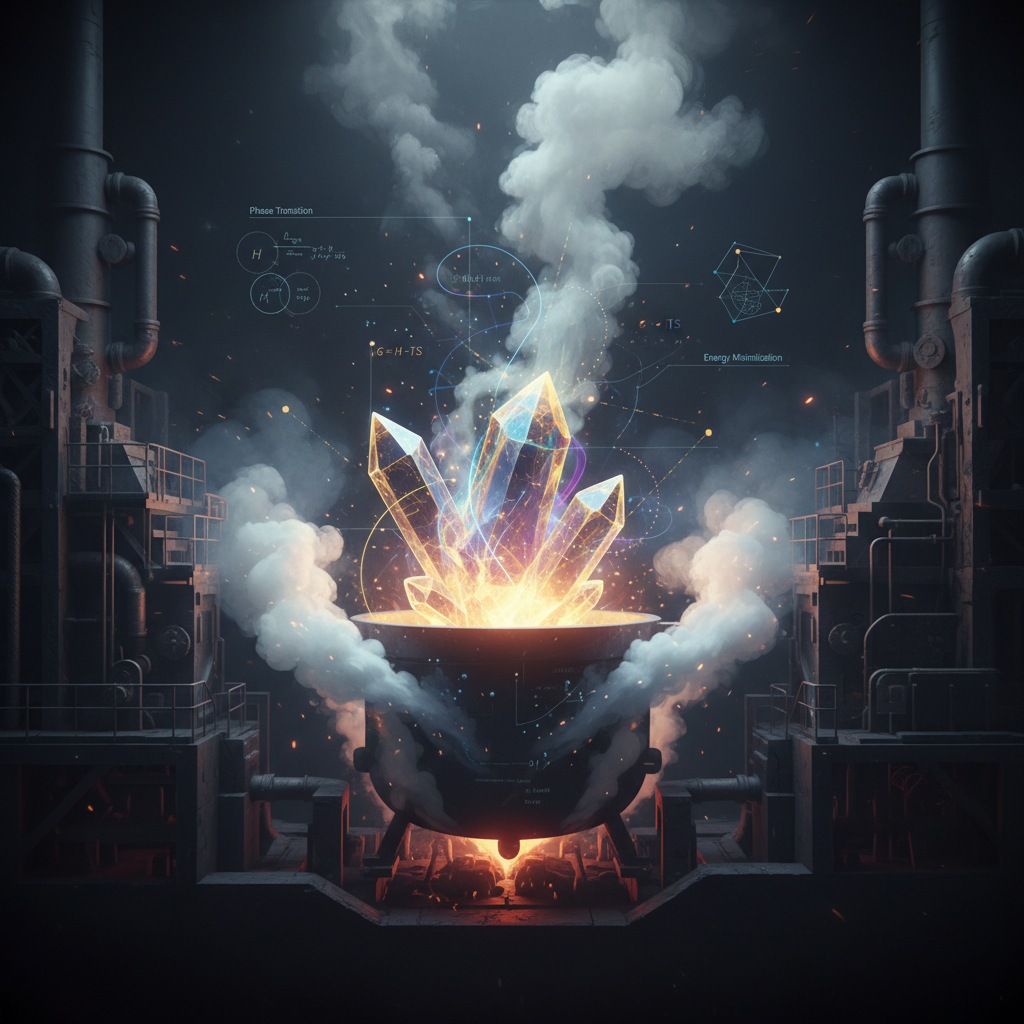
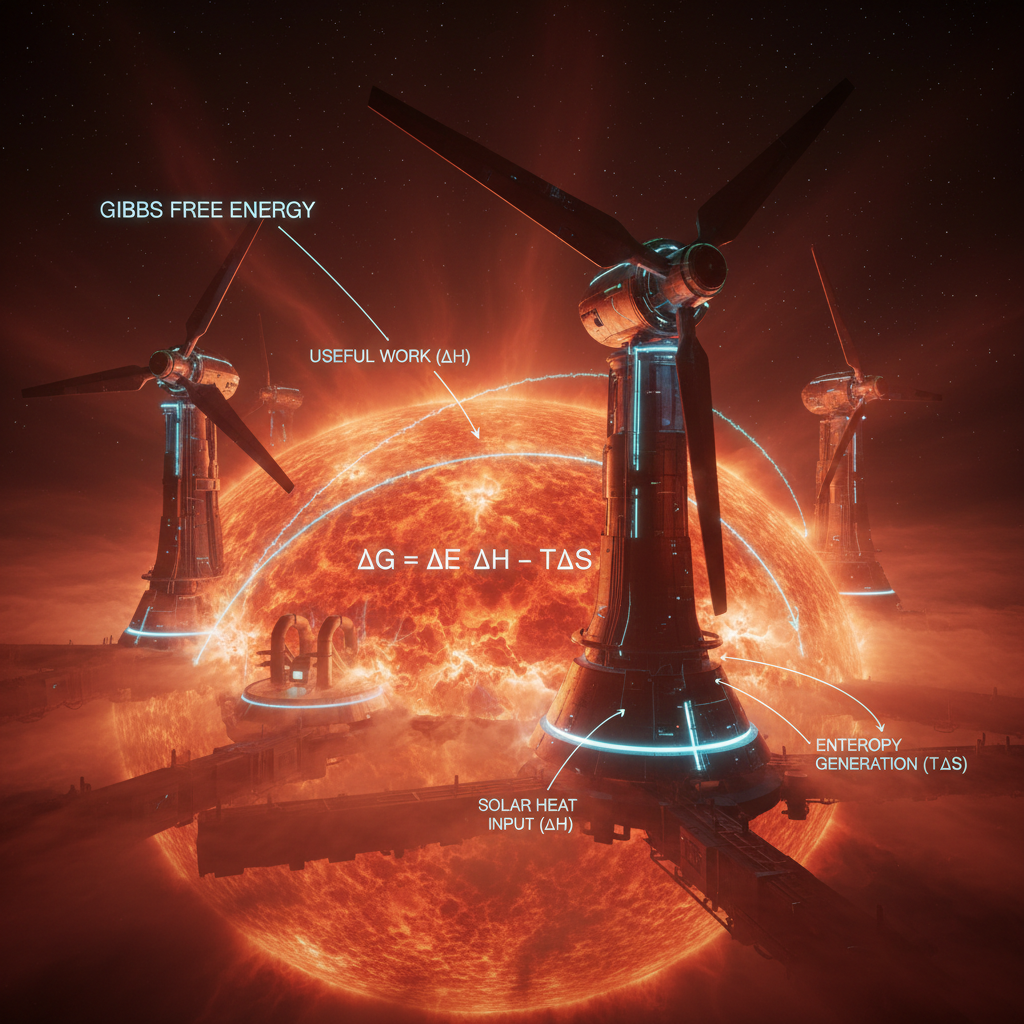
Gibbs Free Energy is named after Josiah Willard Gibbs, the Yale physicist who gave us a way to predict which chemical reactions will happen on their own and which ones won't. The equation is deceptively simple: ΔG = ΔH - TΔS.
When ΔG is negative, the reaction is spontaneous. It will happen without external input. The universe permits it. When ΔG is positive, you need to force it. Push energy in. Make it happen against the gradient.
The equation contains everything: ΔH is enthalpy, the heat content, the raw energy exchange. T is temperature, the ambient chaos level. ΔS is entropy, the tendency toward disorder. Together they determine what's possible and what's not. What flows naturally and what requires work.
You live inside this equation now. Every digital interaction has its own Gibbs energy. Some things you do online are spontaneous. They happen with negative ΔG, flowing downhill through the least resistance path. Others require activation energy, effort, intention. The platforms know which is which.
Engineered Spontaneity
The feed is designed for negative ΔG. Infinite scroll means no activation energy required to see the next post. Autoplay means no decision point between videos. Variable reward schedules—sometimes good content, sometimes mediocre, never predictable—maximize entropy, keeping your temperature high, your system chaotic and reactive.
The enthalpy is optimized too. Each interaction releases a small burst of dopamine. A like. A comment. A view count ticking up. These are exothermic reactions in your reward system. They feel good. They release energy. Negative ΔH.
And entropy? Entropy always increases. Your attention fragments. Your thoughts scatter. The number of possible states you could be in—which video, which post, which notification—multiplies exponentially. High entropy. Positive ΔS. At the temperature of constant stimulation, this term dominates.
Put it together: negative enthalpy change, positive entropy change, multiply by temperature. ΔG is deeply negative. Engagement is spontaneous. Inevitable. You don't choose to scroll. The thermodynamics of the system make scrolling the path of least resistance.
The Cost of Non-Spontaneous Actions
Now consider the opposite. Closing the app. Reading a book. Writing something original. These have positive ΔG. They're non-spontaneous. They require work input.
Closing TikTok means fighting against the entropy gradient. Your attention must be gathered, consolidated, focused. Entropy must decrease. That costs energy. The enthalpy is unfavorable too—no immediate dopamine hit, no notification burst, no variable reward. You're pushing the reaction uphill.
The platforms understand this intuitively. They've engineered the energy landscape so that staying has negative ΔG and leaving has positive ΔG. They've made engagement spontaneous and disengagement forced. They've turned your attention into a thermodynamic system and optimized every variable.
This is why willpower fails. You're not fighting a habit. You're fighting the second law of thermodynamics. You're trying to make a non-spontaneous reaction occur through sheer intention. And intention, it turns out, is expensive. It requires free energy you may not have.
Temperature and Equilibrium
Temperature in the Gibbs equation isn't just a number. It's a measure of available thermal energy, of ambient chaos, of how much the entropy term matters. At low temperatures, enthalpy dominates. At high temperatures, entropy takes over.
The attention economy runs hot. Notifications keep your temperature elevated. Breaking news. Trending topics. Urgent messages. The system maintains a high T, ensuring that entropy—disorder, fragmentation, chaos—weighs heavily in every calculation.
At high temperature, even slightly exothermic reactions become spontaneous if they increase entropy enough. At high temperature, you become reactive instead of intentional. You follow the entropy gradient. You fragment.
Equilibrium in a thermodynamic system is when ΔG equals zero. No driving force in either direction. But you never reach equilibrium online. The platforms won't let you. They continuously inject energy—new content, new notifications, new provocations—keeping the system far from equilibrium, keeping ΔG negative, keeping you engaged.
Reversing the Gradient
So what do you do? You can't change the thermodynamics of the platforms. But you can change your local conditions. You can lower your temperature. Turn off notifications. Reduce the ambient chaos. At lower T, the entropy term matters less. Enthalpy—the actual value of an action—can dominate again.
You can increase the activation energy for spontaneous reactions. Delete apps. Use website blockers. Add friction. Make the path of least resistance less accessible. Non-spontaneous doesn't mean impossible. It just means you need to input work.
You can couple reactions. In biochemistry, cells couple energetically unfavorable reactions with favorable ones. ATP hydrolysis—highly spontaneous—drives protein synthesis—non-spontaneous. You can do the same. Pair the hard thing with something that provides energy. Write after exercise. Read after coffee. Use one spontaneous process to drive another.
But mostly, you have to accept the reality. Attention is a thermodynamic system now. The platforms have optimized the energy landscape. Engagement is spontaneous. Disengagement requires work. Presence requires constant energy input against the gradient.
The Direction the Universe Allows
Gibbs Free Energy tells you which direction a system will spontaneously move. Negative ΔG means forward. Positive ΔG means it won't happen without help. The equation doesn't judge. It just describes what's thermodynamically permissible.
The attention economy has made extraction spontaneous and autonomy non-spontaneous. It has engineered a world where the path of least resistance leads directly through your data, your time, your presence. Where scrolling happens automatically and stopping requires activation energy you might not have.
You feel it every time you try to close the app and can't. Every time you mean to check one thing and emerge thirty minutes later, disoriented. That's not weakness. That's thermodynamics. That's ΔG being negative. That's spontaneity in a system designed to make you react instead of act.
The universe allows certain directions. The platforms have learned to align their interests with those directions. To make what benefits them thermodynamically favorable for you. To turn your attention into a spontaneous reaction, flowing downhill, inevitable, like water finding the lowest point.
But non-spontaneous doesn't mean impossible. It means work. It means energy input. It means fighting the gradient. Sometimes the most human thing you can do is force a reaction that the universe says shouldn't happen. Sometimes freedom is positive ΔG.
Data emitted: 1100db
Data emitted: 1,100 words • 6.5KB • 5-minute read