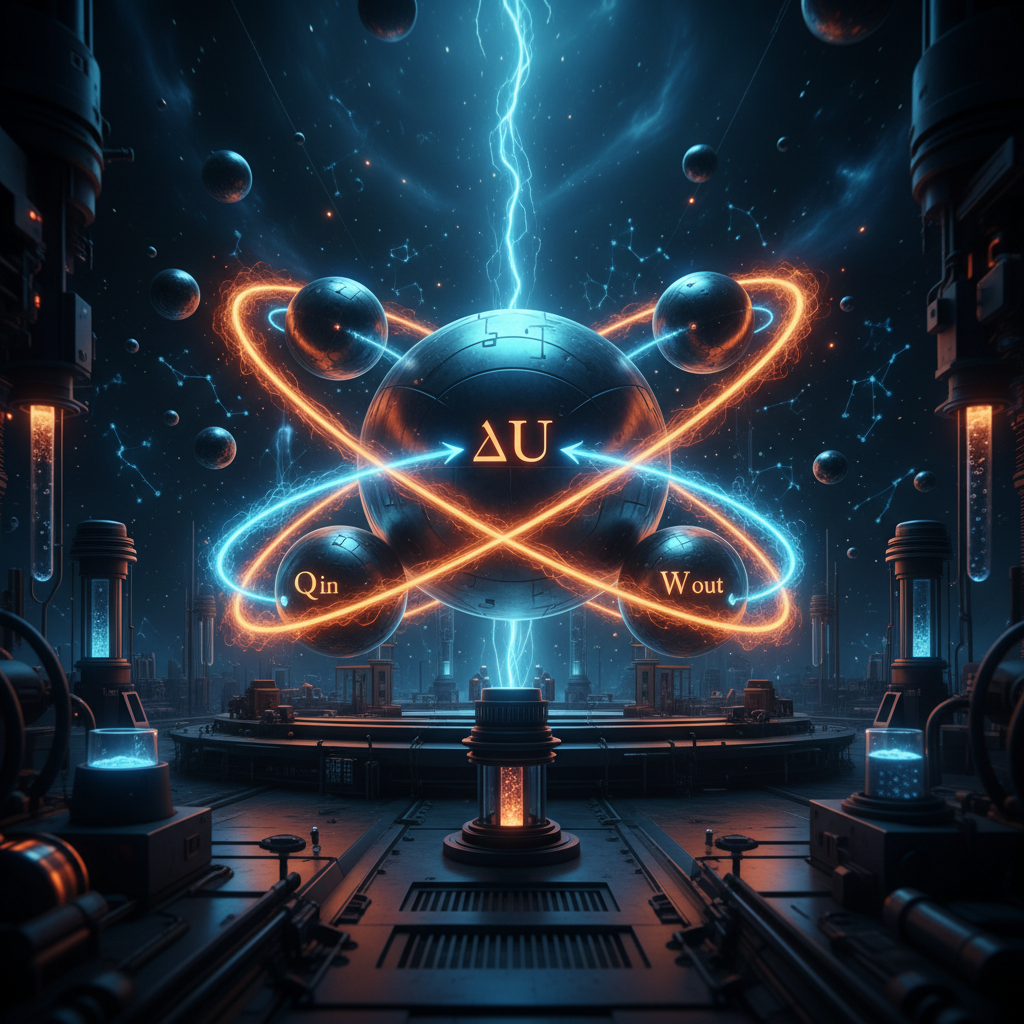
You wake up and reach for your phone. The battery is at 47%. By noon, it's at 12%. By evening, dead. You plug it in. The cycle continues. Energy flows, transforms, but never disappears.
The First Law of Thermodynamics tells us that energy cannot be created or destroyed—only converted from one form to another. Your phone's battery doesn't lose energy to the void. It transforms electrical potential into light, heat, electromagnetic radiation. Into the glow of your screen. Into the data packets that carry your thoughts across fiber optic cables at the speed of light.
But there's another energy at play here. One that doesn't appear in physics textbooks but governs your digital existence with the same ironclad certainty.
The Conservation of Attention
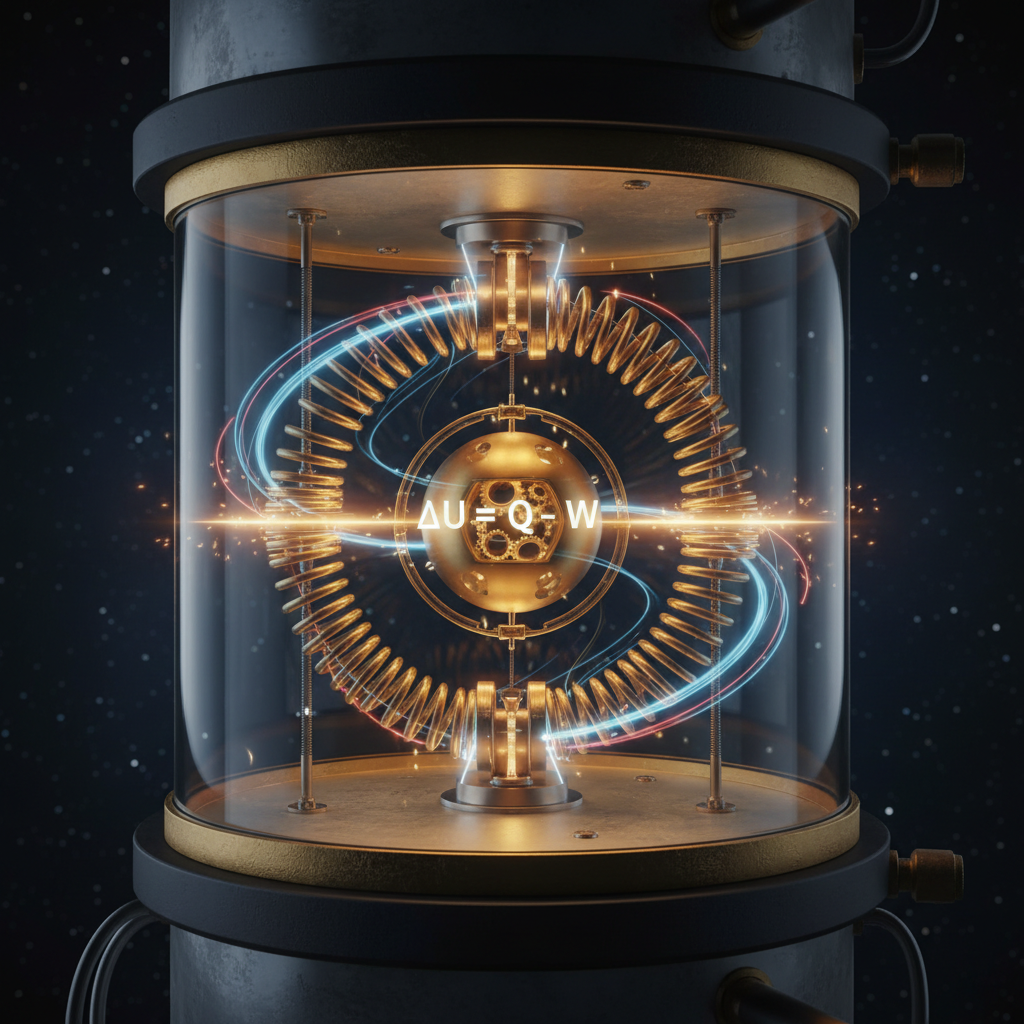
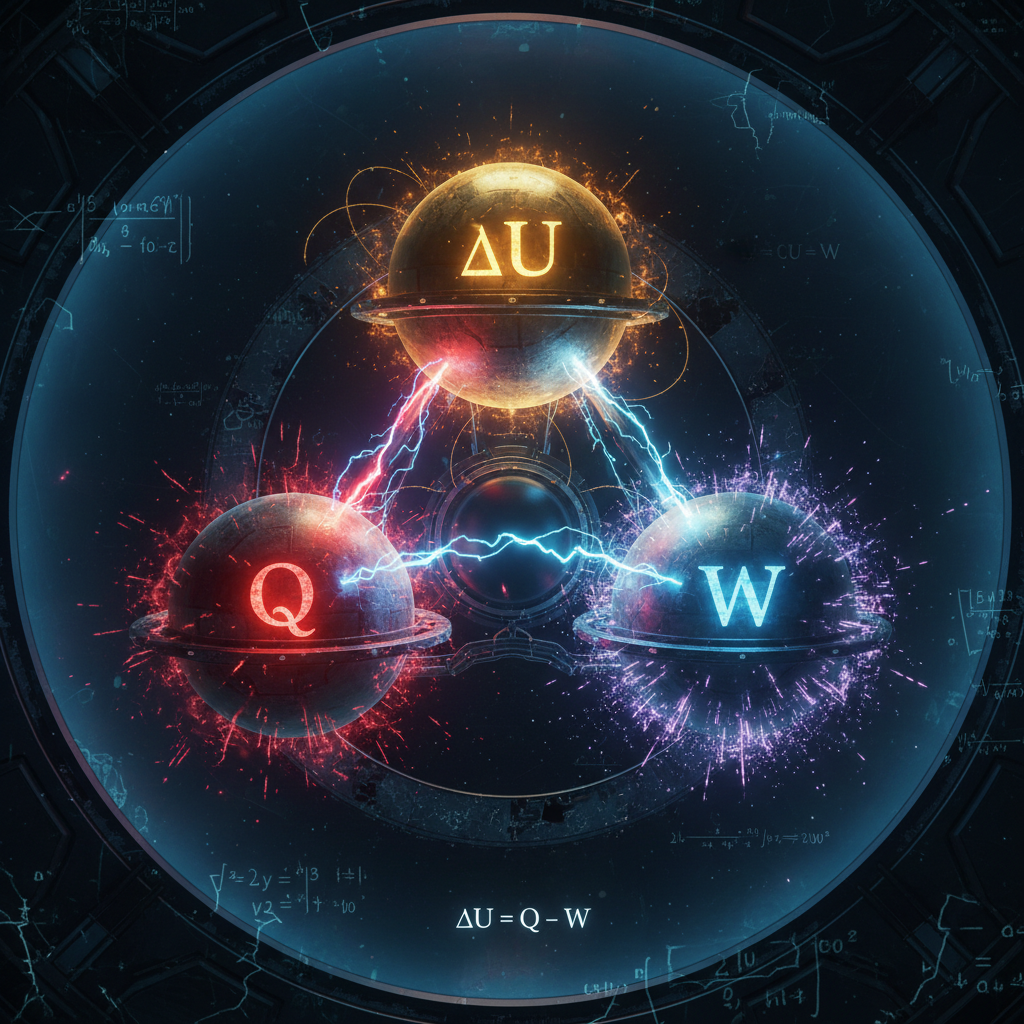
In thermodynamics, we write the First Law as ΔU = Q - W. The change in a system's internal energy equals the heat added to it minus the work it performs. Simple. Elegant. Inviolable.
Your attention operates under similar constraints. You have a fixed amount each day—call it your cognitive energy budget. When you open Instagram, that energy doesn't vanish. It converts. Your focus becomes engagement metrics. Your curiosity becomes click-through rates. Your emotional response becomes training data for recommendation algorithms.
The platforms understand this instinctively. They've built empires on the First Law of Attention: your focus cannot be created or destroyed, only transferred. From you to them. From your intentions to their objectives. From your autonomy to their optimization functions.
Every notification is a heat exchange. Every autoplay video is work performed on your system. The equation balances perfectly—except you're not the one who profits from the conversion.
Closed Systems and Open Wounds
The First Law only holds in closed systems. In physics, that means no energy enters or leaves the boundaries we've defined. The universe as a whole is closed. Your coffee mug is not—it loses heat to the surrounding air, which is why your morning brew goes cold.
The attention economy pretends to be an open system. You can choose what to watch, what to read, where to click. Freedom of choice. Agency. But look closer at the boundaries.
Your phone is a closed system. The apps you can install are curated by gatekeepers. The content you see is filtered through algorithms you didn't write and can't audit. The recommendations that guide your attention flow from models trained on billions of users who came before you.
You think you're exploring an open landscape of possibility. You're actually circulating through a closed loop of engagement optimization. Your attention energy cannot escape the system. It can only be converted into forms that serve the system's purpose.
The Efficiency Problem
No energy conversion is perfectly efficient. When your phone's processor runs, some electrical energy becomes useful computation. Some becomes waste heat—that's why your device gets warm when you're doom-scrolling.
The Second Law of Thermodynamics (we'll get there) tells us that some energy always degrades into unusable forms. Entropy increases. Order decays into disorder.
The same applies to your attention. When you spend three hours on TikTok, not all of that cognitive energy converts into genuine entertainment or connection or knowledge. Some of it becomes waste heat. Anxiety. Comparison. Regret. The vague sense that you've lost time you can't recover.
The platforms have optimized for their efficiency, not yours. They've minimized the energy lost to friction—infinite scroll, autoplay, algorithmic feeds that predict what you want before you know you want it. But they haven't minimized your waste heat. They've externalized it. Your cognitive exhaustion, your fractured attention span, your inability to focus on a book for more than five minutes—these are the entropy costs of their optimization.
Energy States and Potential Wells
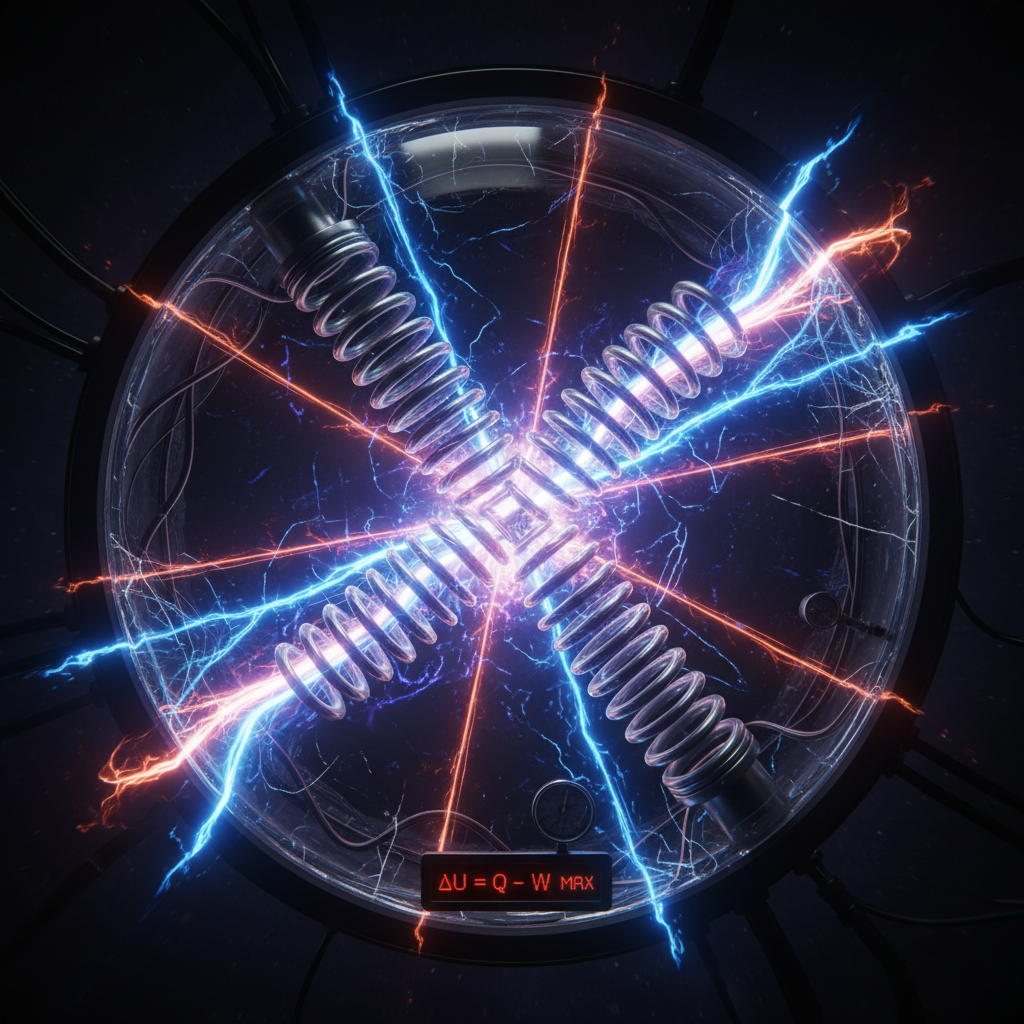
In physics, a potential well is a region where a particle has lower energy than its surroundings. A ball at the bottom of a bowl. A satellite in orbit. Once you're in the well, it takes energy to escape.
Every app is a potential well for your attention. The deeper the well, the harder it is to leave. That's why TikTok's algorithm is so effective—it's created a well so deep that climbing out requires more activation energy than most people can muster.
You open the app "just for a minute." Thirty minutes later, you're still there. You didn't decide to stay. You just never generated enough energy to leave. The well held you.
The First Law says that energy is conserved. It doesn't say anything about freedom. A particle at the bottom of a potential well still has all its energy. It's just trapped in a configuration that makes escape statistically unlikely.
The Work-Energy Theorem of Digital Life
In classical mechanics, the work done on an object equals its change in kinetic energy. Push a box across the floor, and you've transferred energy from your muscles to the box's motion. The energy doesn't disappear. It changes form.
When you scroll, you're doing work. Not in the physical sense—your thumb moves millimeters—but in the attentional sense. You're expending cognitive energy to process information, make micro-decisions, generate emotional responses. That work doesn't benefit you. It benefits the system you're working within.
You're a heat engine running in reverse. Instead of converting thermal energy into useful work, you're converting your finite attention into someone else's metrics. Your kinetic energy—your capacity for action, for creation, for genuine connection—gets transformed into potential energy stored in advertising databases and engagement statistics.
The conservation law holds. The energy you put in equals the energy extracted. But you're not the one who gets to decide what form that energy takes when it leaves you.
Equilibrium
Thermodynamic equilibrium is a state where no net energy flows between systems. Everything is balanced. Nothing changes. It's the heat death of the universe, played out in miniature.
The attention economy wants you in equilibrium. Not the peaceful kind—the trapped kind. Where your energy input exactly matches their extraction rate. Where you're productive enough to generate valuable data but not so energized that you might leave the system entirely.
You can feel it some days. The flatness. The sense that you're maintaining but not growing. That you're converting energy without building anything. That you're in perfect balance with forces that don't have your interests at heart.
The First Law of Thermodynamics is neither cruel nor kind. It simply describes what is. Energy transforms but persists. Your attention will go somewhere. The only question is whether you're the one directing the conversion, or whether you've outsourced that choice to algorithms optimized for engagement metrics you'll never see.
Your battery is at 47%. The cycle continues. But you can change what the energy becomes.
<em>Data emitted: 1,187 words on energy conservation, attention extraction, and the thermodynamics of being watched. Your reading time was logged. Your scroll depth was measured. The energy you spent here has already been converted into something else.</em>
Data emitted: 1,100 words • 6.5KB • 5-minute read