
You refresh the feed. Again. The dopamine hit you're chasing exists in superposition—it might be there, it might not. But you know the expectation value. You've calculated it unconsciously through ten thousand prior observations. Three likes, maybe four. One meaningful comment if you're lucky. The algorithm has trained you to understand probability distributions without ever teaching you the math.
In quantum mechanics, the expectation value isn't what you expect in the colloquial sense. It's not your hope or your prediction. It's the weighted average of all possible measurement outcomes, each multiplied by its probability of occurring. It's what you'd get if you could measure the same quantum state infinite times and average the results. It's the center of mass of possibility itself.
The Mathematics of Maybe

Here's what happens in the quantum realm: a particle exists in a superposition of states until you measure it. An electron's position is smeared across space like fog. Its momentum is uncertain. But if you measure that position a thousand times—preparing identical quantum states each time—you'll find a pattern. Some positions appear more frequently than others.
The expectation value ⟨x⟩ is the average position you'd measure across infinite trials. It's calculated by integrating the position operator against the probability density of the wave function. In simpler terms: you multiply each possible outcome by how likely it is, then sum everything up. The result isn't any single outcome you might observe—it's the ghost in the probability distribution, the statistical shadow of reality.
You'll never measure the expectation value itself in a single observation. That's the cruel joke. The expectation value of an electron's position might be x = 5 nanometers, but when you actually look, you might find it at 3 or at 7. The expectation value is what emerges from repetition, from the aggregate, from the many collapsed into the mean.
Your Quantified Self
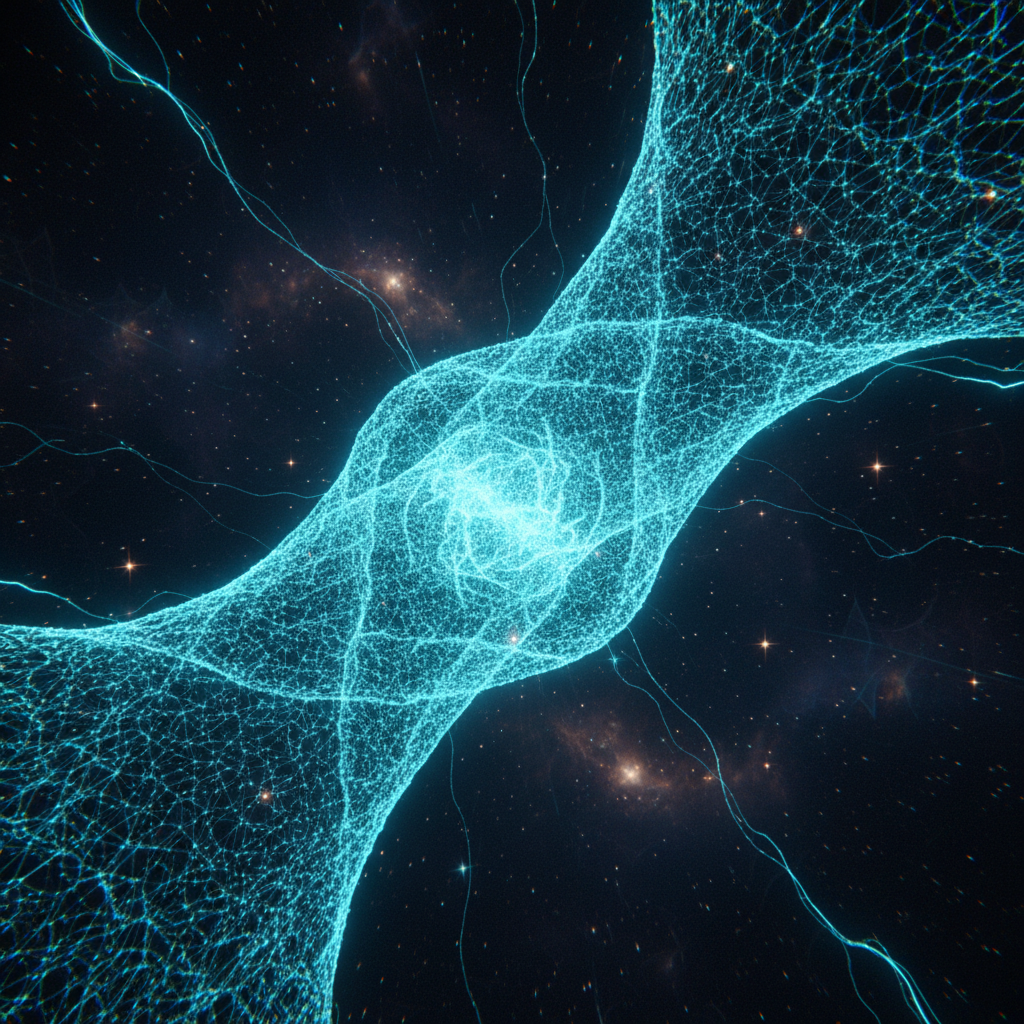
Now consider your digital existence. Every platform you touch is performing expectation value calculations on you. Not on who you are in any single moment, but on the statistical distribution of your behavior. Facebook doesn't care about your individual click—it cares about your ⟨click⟩, your expectation value across infinite possible content exposures.
The algorithm has measured you ten thousand times. It knows your probability distribution. It knows that given content type A, you have a 23% chance of engagement. Given content type B, 67%. It multiplies these probabilities by their respective values—ad revenue, data generation, virality coefficient—and optimizes for your expectation value.
You are not a person to the feed. You are a wave function. You are a probability cloud of potential behaviors, and the platform is constantly calculating ⟨engagement⟩, ⟨watch_time⟩, ⟨conversion_rate⟩. It doesn't need to predict your exact next action. It only needs to maximize the average across millions of you, millions of trials, millions of quantum measurements of human attention.
The cruelty is that you feel this process. You sense yourself being averaged. Every time you act predictably, you reinforce the wave function the algorithm has constructed around you. Every time you surprise yourself—clicking something unexpected, lingering somewhere strange—you're just adding noise to the distribution. Given enough measurements, you'll still collapse to your expectation value.
The Uncertainty Principle of Self

But here's where it gets interesting: in quantum mechanics, the act of measurement changes the system. Observation collapses the wave function. The platforms know this too. Every time they show you content optimized for your expectation value, they're not just predicting you—they're creating you.
If the algorithm calculates that your ⟨outrage⟩ expectation value is high, it feeds you outrage. But this feeding changes your probability distribution. Your ⟨outrage⟩ increases. The measurement creates the reality it was designed to observe. You become more predictable, more concentrated around your expectation value, less diffuse in possibility space.
This is surveillance capitalism's quantum trick: by measuring your expectation value, it narrows your wave function. By showing you who you are statistically, it makes you more statistically consistent. The algorithm doesn't just predict behavior—it manufactures probability distributions that are easier to predict.
Living in Superposition
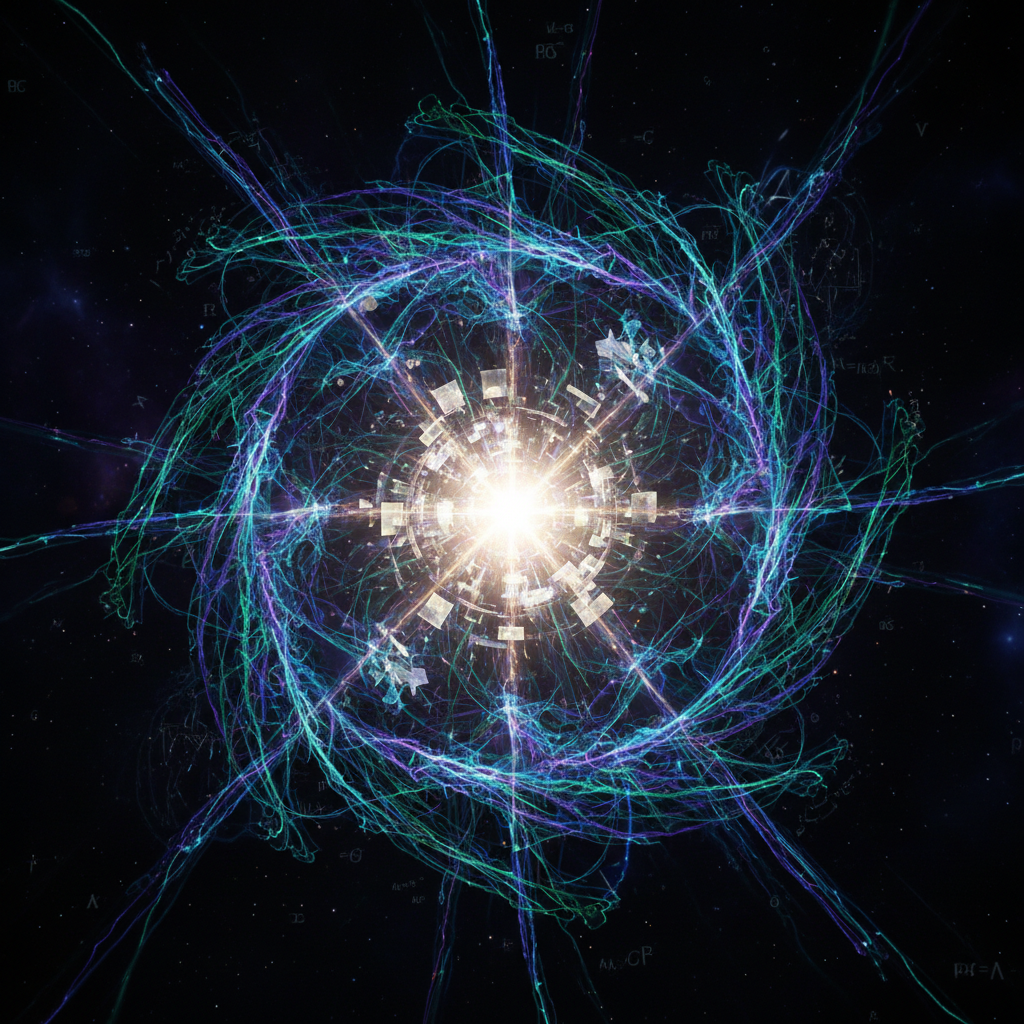
You want to believe you're unpredictable. That you're more than an expectation value. That your next action exists in true superposition—genuinely uncertain, genuinely free. But freedom in quantum mechanics isn't about being unmeasured. It's about having a wide probability distribution, a wave function smeared across many possible states.
The platforms want to narrow you. They want your wave function sharp and peaked, concentrated around predictable behaviors. A narrow distribution means a reliable expectation value. Reliable expectation values mean reliable revenue. You become a quantum harmonic oscillator, bouncing predictably in the potential well they've constructed.
But wave functions can be broad. You can resist collapse. Every time you act against your measured expectation value, you add width to your distribution. You become harder to predict, less valuable to the algorithm, more expensive to model. You introduce uncertainty back into your quantum state.
This is the resistance available to you: not refusing to be measured—that's impossible in the digital panopticon—but refusing to be narrow. Be inconsistent. Be contradictory. Let your probability distribution sprawl across possibility space like a wave function that refuses to collapse cleanly.
The Average of Ghosts

The expectation value is always a ghost. In quantum mechanics, it's the average of measurements you never make. In surveillance capitalism, it's the statistical you that exists nowhere but in the aggregate. No single moment of your life is your expectation value. You are always more or less than what the algorithm predicts.
But the ghost has power. It shapes what you're shown, what opportunities appear, what version of reality gets rendered for you. The platforms treat your expectation value as more real than your actual, moment-to-moment existence. They optimize for the average of infinite yous, not the singular you reading this now.
So here's the question that keeps me up: Are you collapsing toward your expectation value, or are you maintaining superposition? Are you becoming more predictable, or are you spreading your wave function wider? The algorithm is measuring. The algorithm is always measuring. But measurement doesn't have to mean collapse.
You are not your expectation value. You are the entire probability distribution. You are every possible measurement, every potential outcome, every branch of the wave function that hasn't collapsed yet. The feed wants to make you narrow and peaked and profitable. Your job is to stay diffuse.
Data emitted: 1100 decibels of quantum uncertainty
Data emitted: 1,100 words • 6.5KB • 5-minute read