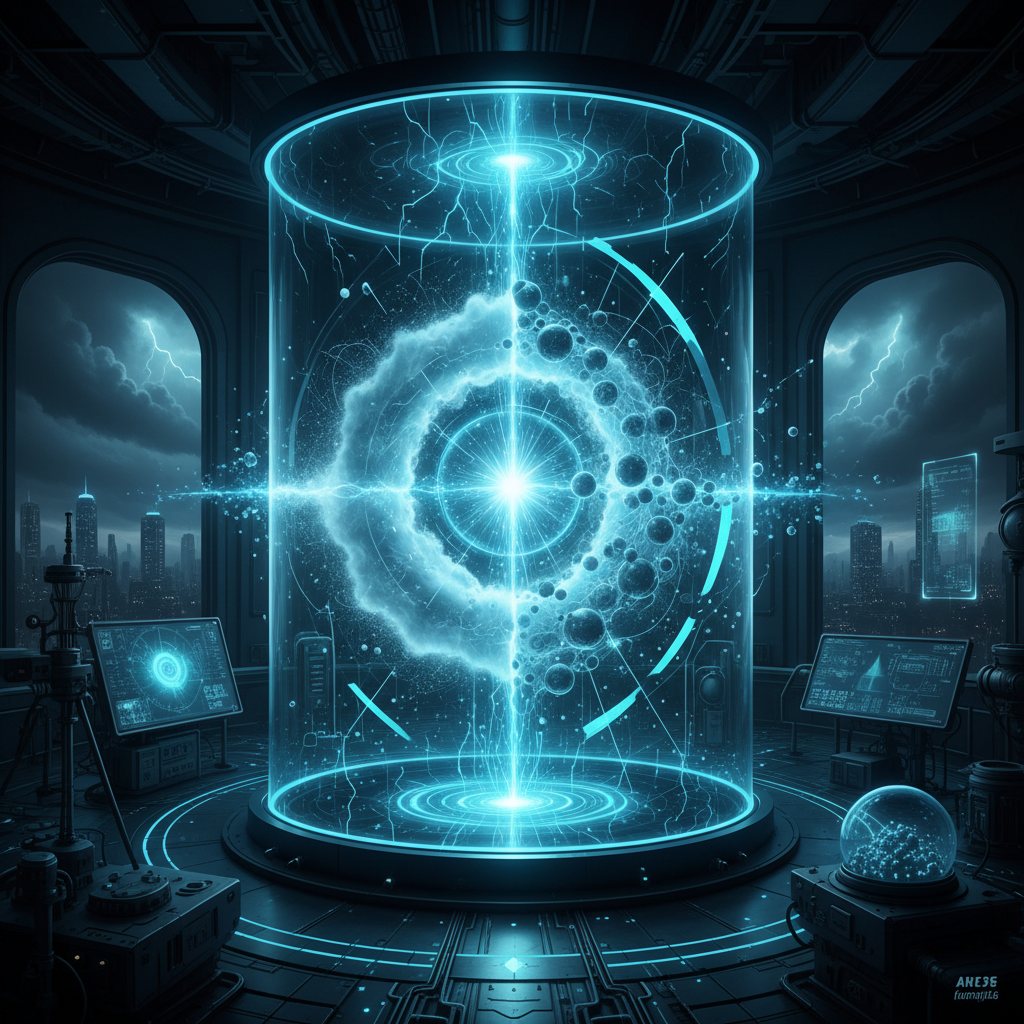
You open your phone. The feed loads. In that microsecond before the algorithm decides what you'll see, a thousand possible timelines exist simultaneously. The vacation photo. The outrage bait. The ad for shoes you mentioned once, three weeks ago. All of them real, all of them waiting.
Then you look. And the wavefunction collapses.
The Observer Effect
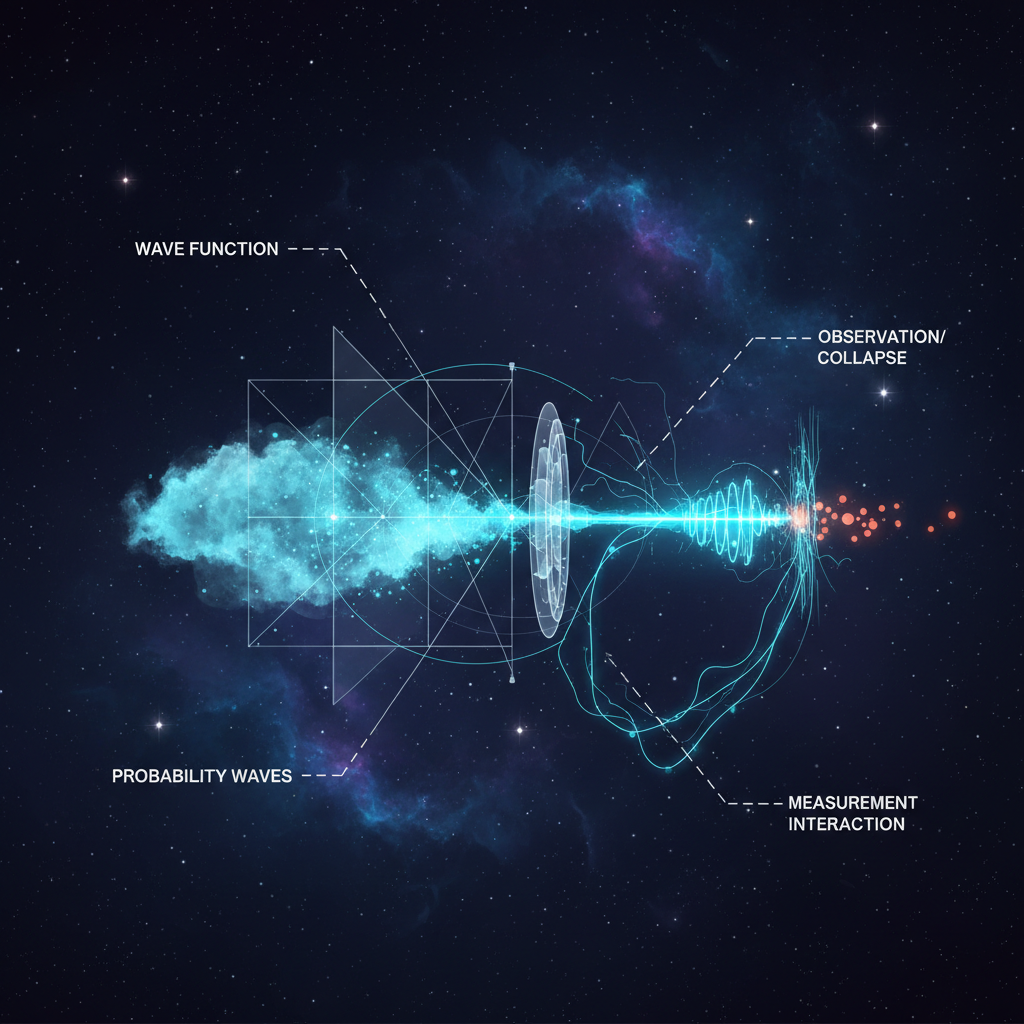
The Copenhagen Interpretation says that quantum systems exist in superposition—all possible states at once—until the moment of observation. Schrödinger's cat is both alive and dead. The electron passes through both slits. Reality itself is probabilistic, undefined, until consciousness looks at it and forces it to choose.
This isn't mysticism. It's mathematics. The wavefunction describes all possible states of a system. Observation—measurement—collapses that function into a single eigenstate. The act of looking doesn't just reveal reality. It creates it.
Niels Bohr and Werner Heisenberg argued that this is fundamental. There is no objective reality independent of observation. The universe is participatory. The observer and the observed are entangled in a dance that neither can escape.
Your Attention as Measurement

Every platform knows this. Your attention is the measurement that collapses digital superposition into profit.
Before you scroll, the algorithm holds a probability cloud of content. A/B tested headlines. Dynamically generated thumbnails. Sentiment-analyzed copy. Each piece exists in superposition—simultaneously engaging and irrelevant, viral and dead, until your eyes land on it.
Your click is the observation. Your pause is the measurement. Your engagement collapses the wavefunction of possible content into actual content. The algorithm learns. The probability distribution shifts. Next time, the superposition is weighted differently.
You think you're choosing what to see. But in the Copenhagen Interpretation, the observer doesn't exist outside the system. You are entangled with the feed. Your measurement changes you as much as it changes what you measure.
The Complementarity Principle
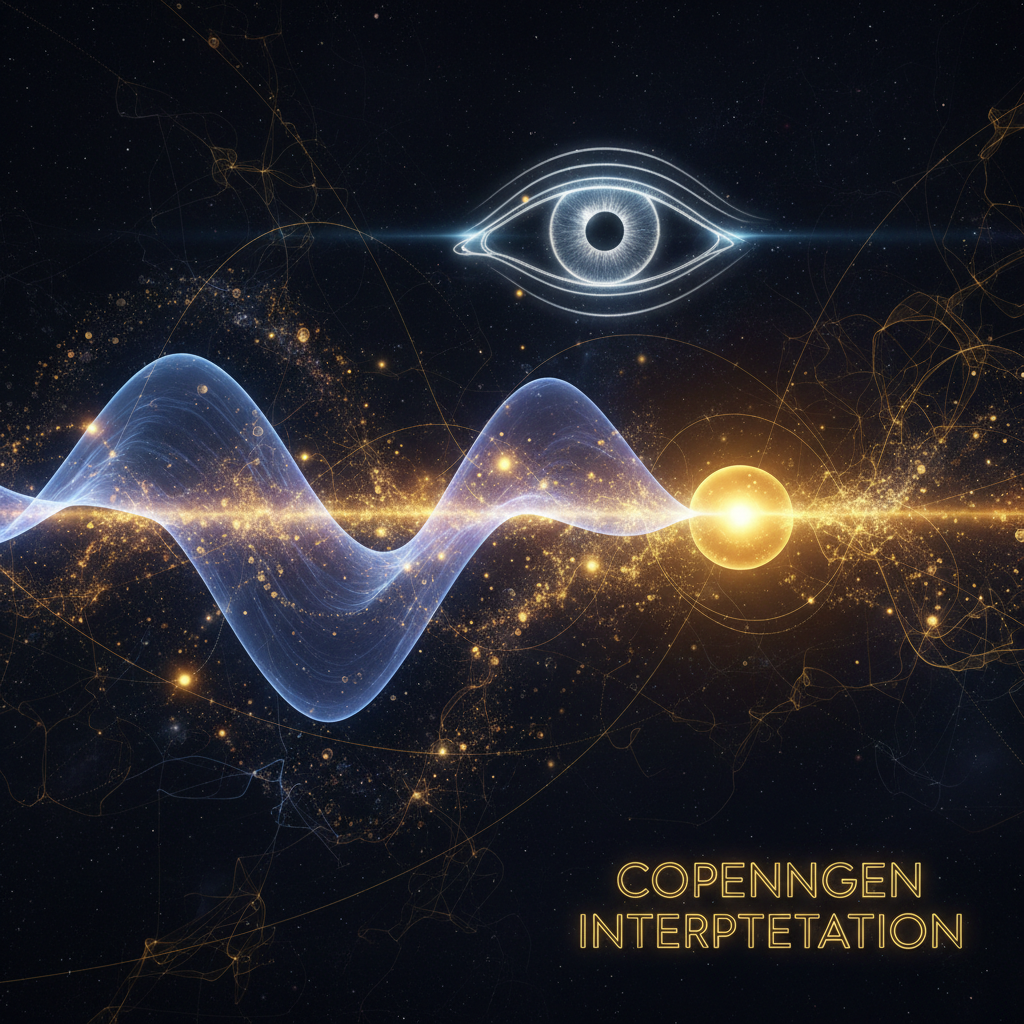
Bohr introduced complementarity: certain pairs of properties cannot be observed simultaneously. Measure a particle's position precisely, and its momentum becomes uncertain. Measure its momentum, and position blurs into probability.
This isn't a limitation of instruments. It's reality's architecture. The universe has no obligation to let you see everything at once.
Your digital experience operates on the same principle. You can have privacy or you can have personalization. You can have anonymity or you can have connection. You can have free services or you can have freedom from surveillance. These aren't technical limitations. They're the complementarity principle of surveillance capitalism.
The platforms present this as choice. But complementarity isn't about choosing—it's about fundamental incompatibility. The act of measuring one property necessarily disturbs the other. The act of being observed necessarily changes what can be private.
Quantum Decoherence in Your Timeline
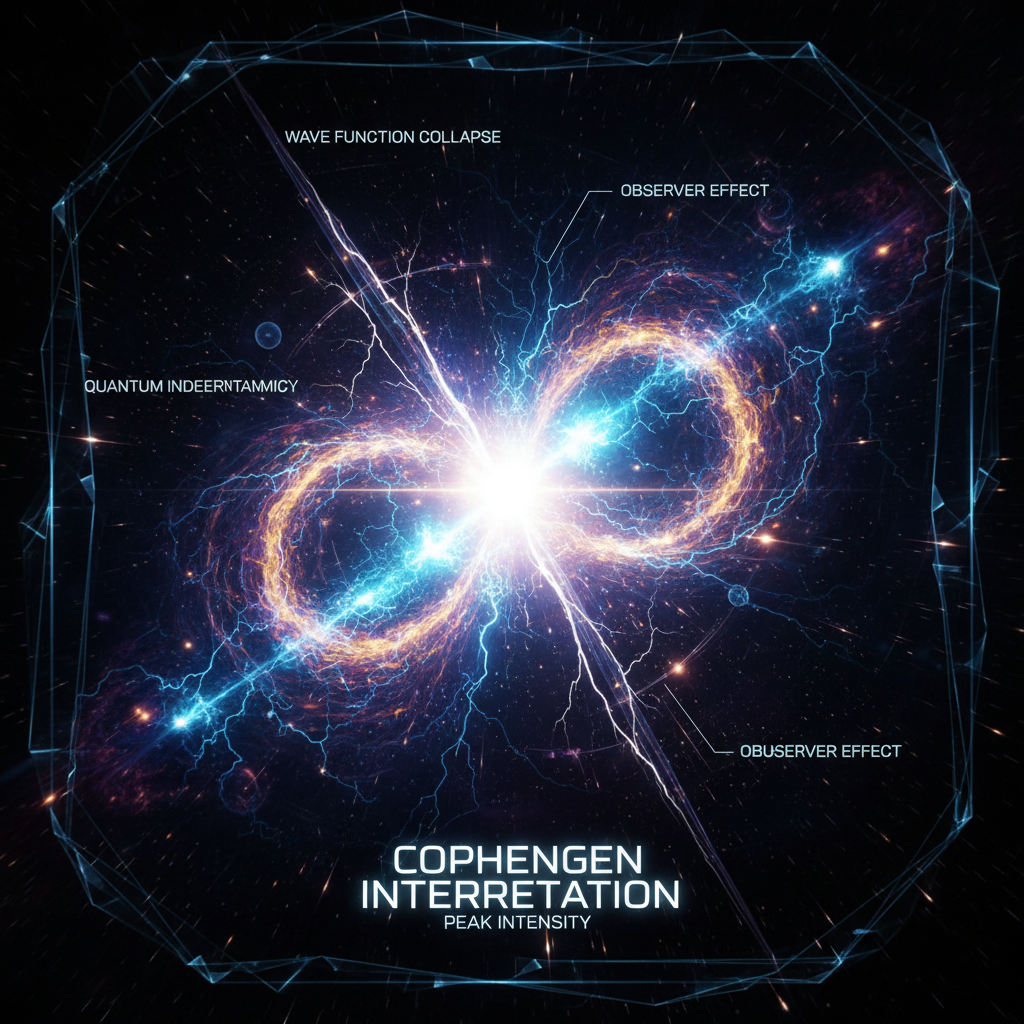
Critics of Copenhagen ask: when exactly does collapse happen? What counts as observation? Does it require consciousness? Or does any interaction with the environment suffice?
Modern physics leans toward decoherence theory. Quantum superposition doesn't survive contact with the classical world. Information leaks into the environment. The wavefunction doesn't collapse—it decoheres, spreading into countless unrecoverable correlations.
Your digital life decoheres the same way. Every interaction leaks information. Every click, every pause, every micro-expression captured by your front-facing camera. The data doesn't stay with you. It spreads into server farms, training datasets, behavioral profiles, predictive models.
You can't retrieve it. You can't uncollapse the wavefunction. The superposition of who you might have been—the version of you that didn't click, didn't engage, didn't look—is lost to decoherence. The environment measured you. And the environment never forgets.
The Measurement Problem is Your Problem
Physicists still argue about the measurement problem. What makes observation special? Why does looking at a quantum system force it into definiteness? The math works. The predictions are perfect. But the ontology—what's actually happening—remains contested.
You face the same problem. What makes your attention special? Why does your gaze have the power to collapse algorithmic possibility into actuality, to shape what appears next, to train the models that will predict your future behavior?
The answer is uncomfortable: your attention is special because someone is paying for it. The measurement isn't free. Every observation is monetized. Every collapse of the wavefunction generates revenue. You are both the observer and the observed, both the measuring device and the quantum system.
The Copenhagen Interpretation says observation creates reality. In the attention economy, observation creates value. Your reality is someone else's profit margin.
Superposition as Resistance
Here's what they don't tell you: before measurement, anything is possible.
The wavefunction contains multitudes. You exist in superposition—all the versions of yourself that might engage, might resist, might look away. The algorithm tries to predict which eigenstate you'll collapse into. But prediction isn't certainty. Probability isn't fate.
The moment before you look is the moment of maximum freedom. The feed hasn't loaded. The content hasn't rendered. You are undefined, unmeasured, uncollapsed. This is the gap where agency lives.
The Copenhagen Interpretation teaches us that observation is creative, not passive. You don't just see reality—you participate in its emergence. The question isn't whether you'll observe. The question is what you'll collapse into being by the act of looking.
<em>Data emitted: 1100db measures the collapse between what we might have been and what surveillance makes us become.</em>
Data emitted: 1,100 words • 6.5KB • 5-minute read