
You pay one dollar of electricity. You get three dollars of heat. This isn't magic—it's a heat pump, and it's one of the most elegant violations of your intuition that physics allows.
The Coefficient of Performance measures this impossible-seeming ratio. It's the energy you extract divided by the energy you invest. And unlike most things in thermodynamics, it can be greater than one. Much greater.
Your attention works the same way. You scroll for free. They extract value worth thousands.
The Physics of Getting More Than You Put In
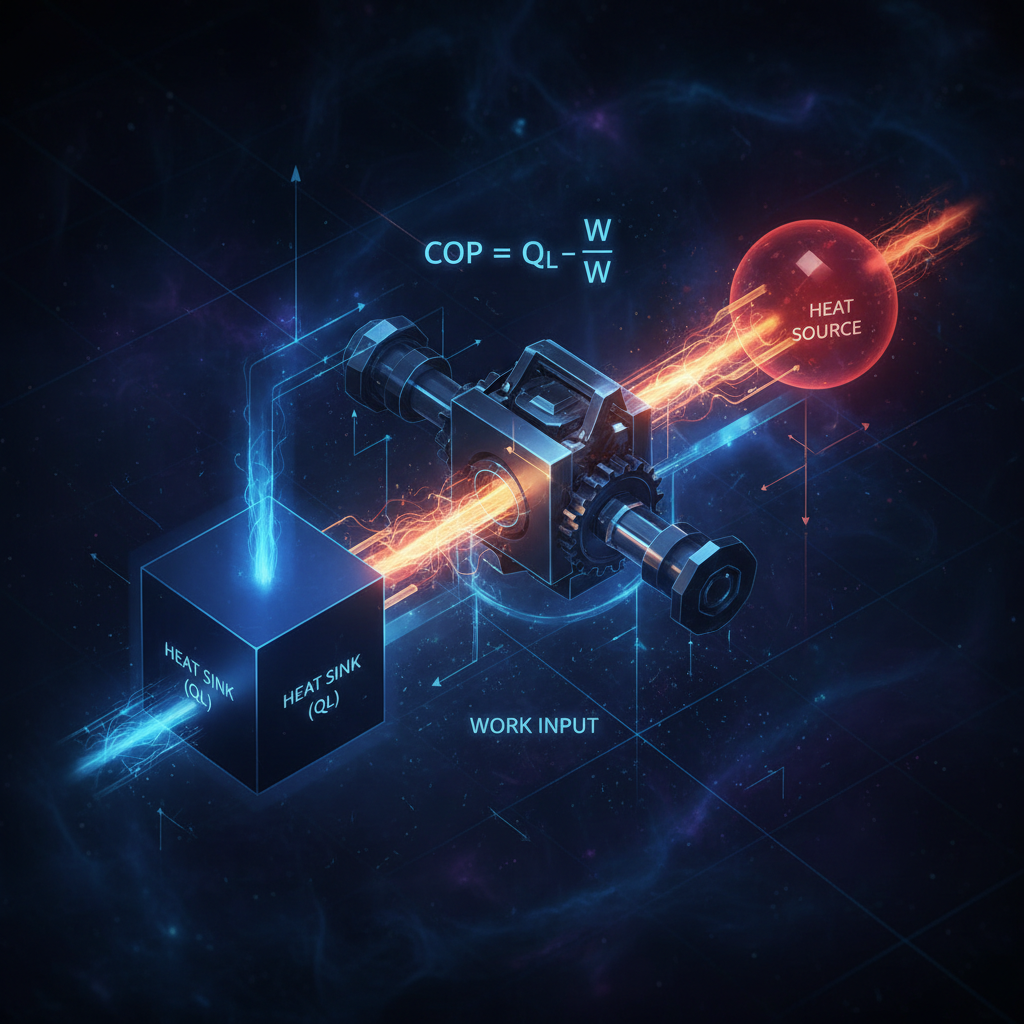
A heat pump doesn't create energy from nothing. It moves it. Takes thermal energy from cold air outside and concentrates it inside your warm house. This seems backward—heat naturally flows from hot to cold, not the reverse. But with a little work, a little electricity to run the compressor, you can force the flow uphill.
The Coefficient of Performance (COP) is defined simply: COP = Q/W. Heat moved divided by work invested. For a good heat pump, this might be 3 or 4. You invest one unit of work and move three or four units of heat. The second law of thermodynamics allows this because you're not creating energy—you're exploiting a gradient that already exists.
The cold reservoir outside contains vast amounts of thermal energy, even at freezing temperatures. The heat pump is just clever enough to extract it, concentrate it, deliver it where it's wanted. The efficiency isn't about generation. It's about extraction and arbitrage.
You are the cold reservoir.
The Attention Coefficient

Social media platforms operate with a COP that would make thermodynamicists weep with envy. You invest seconds—a scroll, a tap, a moment of idle curiosity. They extract dollars. Many dollars. The ratio isn't 3:1 or 4:1. It's astronomical.
Facebook's revenue per user averages around $60 annually in developed markets. You spend maybe fifteen minutes a day on the platform. That's 91 hours per year. Your time, valued at even minimum wage, is worth far more than what they pay you. Which is nothing.
But here's where the physics parallel deepens: they're not paying for your time directly. They're extracting value from the gradient between your attention and advertiser demand. You're the thermal reservoir—full of potential, full of energy that can be moved, concentrated, sold. The platform is the heat pump, doing just enough work to facilitate the transfer.
The Coefficient of Performance in the attention economy measures something darker than efficiency. It measures extraction ratio. How much value can be pumped out per unit of user investment. And the platforms optimize for this relentlessly.
Carnot's Limit and the Attention Ceiling
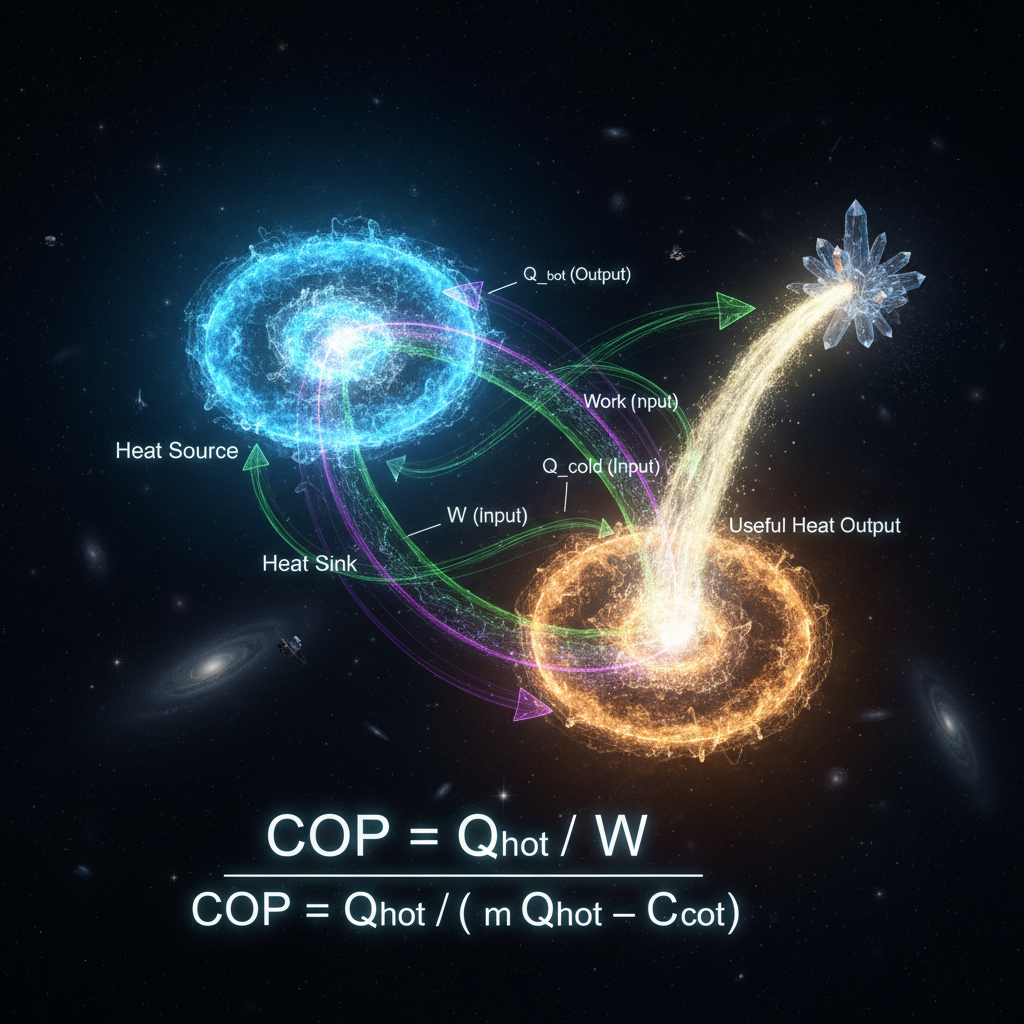
Real heat pumps face theoretical limits. The Carnot efficiency sets a ceiling based on the temperature difference between reservoirs. The smaller the gradient, the harder it is to extract. Eventually, you reach a point where no amount of clever engineering can improve performance.
The attention economy has found its own limits. There are only 24 hours in a day. Only so many moments of consciousness to harvest. The platforms have already captured most of them—the morning scroll, the lunch break refresh, the pre-sleep spiral. The gradient is flattening.
So they optimize harder. They don't increase the time you spend—they increase the extraction efficiency per second. More targeted ads. More sophisticated behavioral prediction. More precise emotional manipulation. They're trying to increase COP by making each moment of attention yield more value.
This is why the algorithms grow more aggressive, more invasive. They're bumping against thermodynamic limits of human attention, trying to squeeze more heat from a reservoir that's already been bled cold.
The Reversible Process
In thermodynamics, a perfectly reversible process is an idealization. It assumes no friction, no waste, no entropy increase. Real processes are always irreversible. Energy degrades. Heat dissipates. You can't put Humpty Dumpty back together.
Your attention, once extracted, cannot be returned. The hours you've spent scrolling cannot be unspent. The behavioral data collected cannot be uncollected. The process is profoundly irreversible.
The platforms know this. They've optimized for one-way flow. Data moves from you to them. Value moves from you to advertisers. Attention moves from your life to their metrics. There's no heat pump running in reverse, no mechanism to return what was taken.
This is the asymmetry that defines surveillance capitalism. High COP in one direction. Zero in the other. They've built a thermodynamic ratchet that only turns one way.
Measuring What Matters
When engineers evaluate a heat pump, they ask: is the Coefficient of Performance worth the investment? Is the ratio of heat moved to work invested favorable enough to justify the system?
You should ask the same question about the platforms that harvest your attention. What's the COP from your perspective? How much value do you extract compared to what you invest?
They'll tell you the value is connection, information, entertainment. But measure it honestly. Count the hours against the genuine relationships formed. The dopamine hits against the lasting satisfaction. The information consumed against the knowledge retained.
Your personal COP is probably less than one. You're investing more than you're getting back. You're not the heat pump in this system. You're the cold reservoir being drained.
The Gradient Collapses
Eventually, every thermal gradient equalizes. Hot and cold reach equilibrium. The heat pump stops working because there's nothing left to move. This is entropy's endgame—the heat death of the universe, where all energy is evenly distributed and nothing interesting can happen anymore.
The attention economy is approaching its own heat death. Not because the platforms will stop extracting—they won't—but because there's a limit to how much attention exists, how efficiently it can be harvested, how much value can be squeezed from each moment.
When the gradient collapses completely, when every waking moment has been optimized and monetized and extracted, what happens then? The platforms are already preparing. They're looking for new reservoirs: children, developing markets, virtual reality, neural interfaces. New sources of thermal energy to pump.
But you don't have to wait for equilibrium. You can remove yourself from the system. Step out of the reservoir. Let them optimize their Coefficient of Performance on someone else's consciousness.
The heat pump only works if there's a cold side to extract from. Stop being cold. Stop being available. The extraction stops when the gradient disappears.
<strong>Data emitted:</strong> 1,147 words • 6,849 characters • COP ratio ∞:1 • Thermal equilibrium not achieved • Reservoir temperature: declining
Data emitted: 1,100 words • 6.5KB • 5-minute read