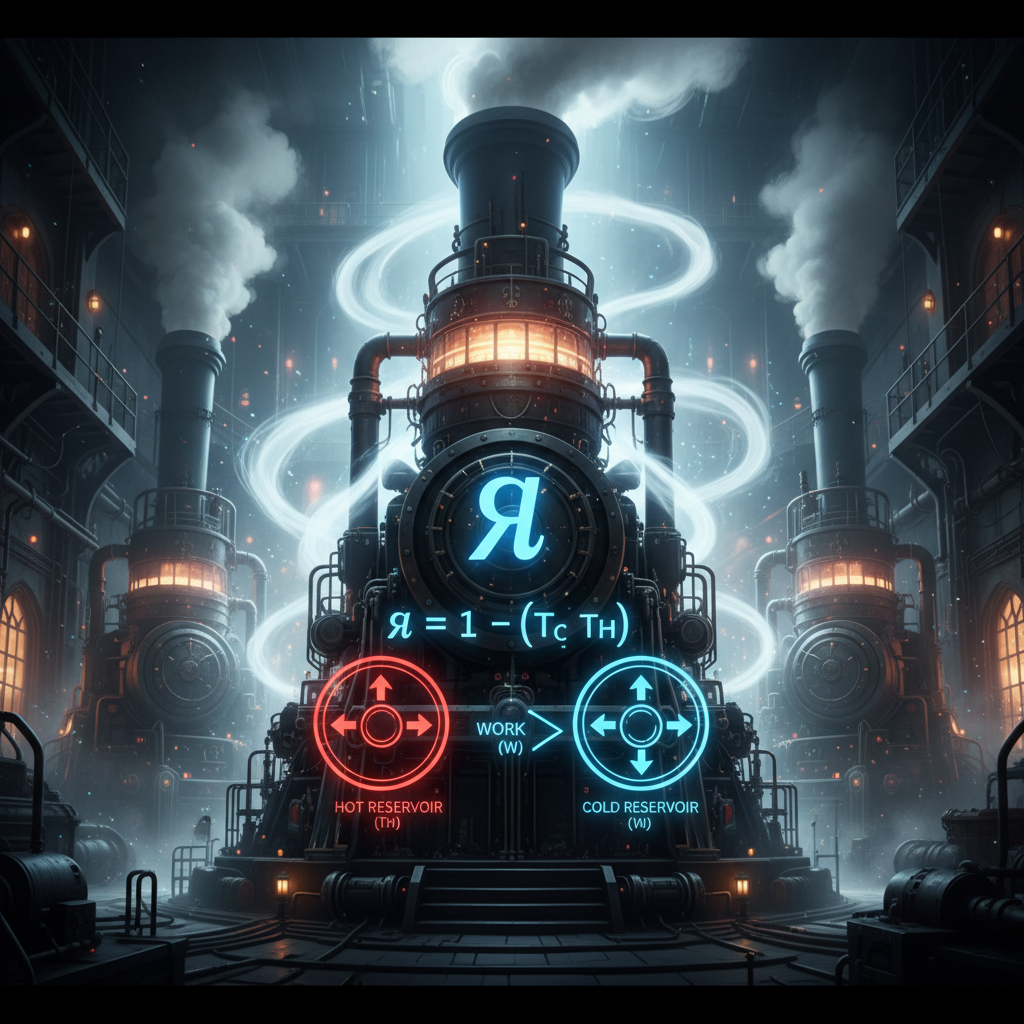
You scroll through your feed at 2 AM, thumb moving in practiced circles. The algorithm serves you exactly what you want—almost. There's always something slightly off, a friction between what you desire and what appears. You keep scrolling. This isn't a bug. It's thermodynamics.
Every recommendation engine, every content algorithm, every attention-extraction system operates under the same fundamental constraint that governs steam engines and refrigerators: the Carnot limit. No matter how sophisticated the machine, some energy must always be wasted. The question is: what counts as waste?
The Perfect Engine That Cannot Exist
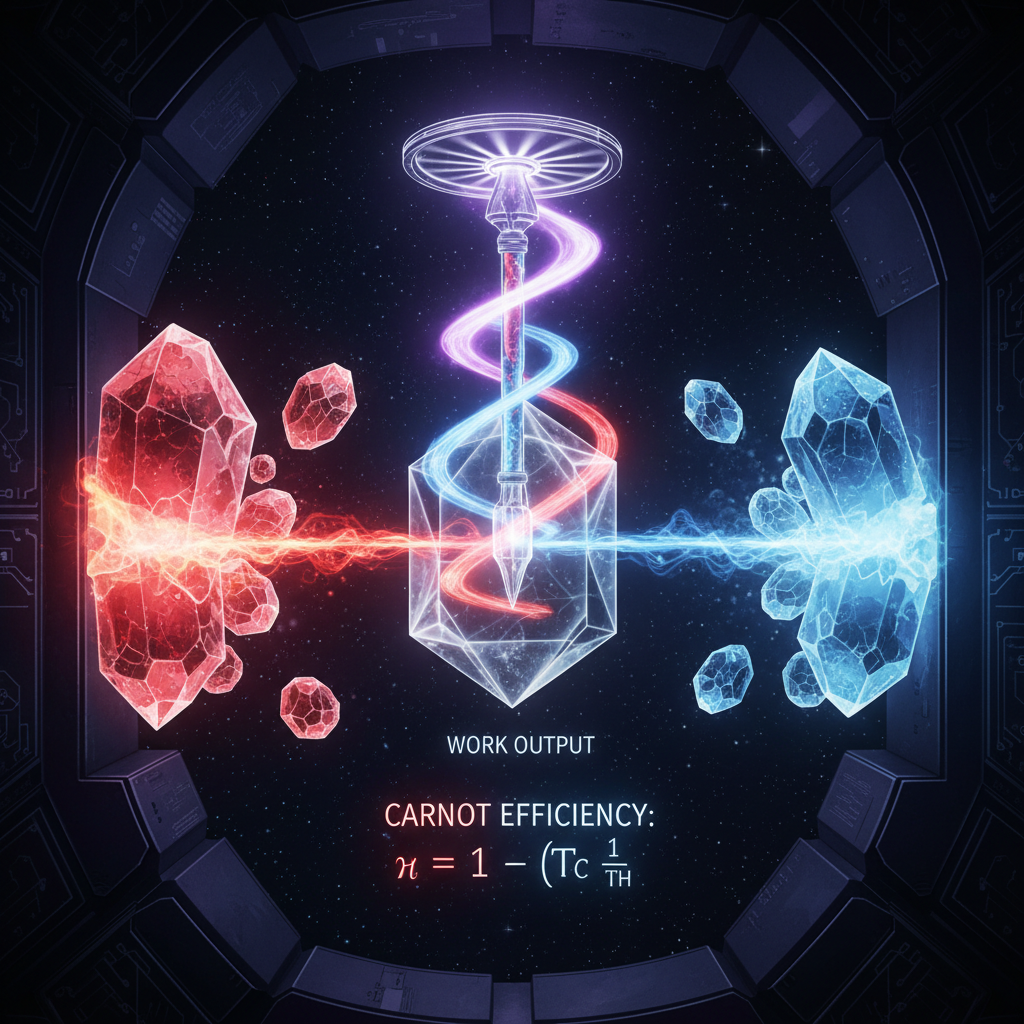
In 1824, Sadi Carnot proved something devastating: no heat engine can be 100% efficient. You cannot take thermal energy from a hot reservoir and convert it entirely into useful work. Some energy must always flow to a cold reservoir. Always. This isn't an engineering problem to be solved with better materials or smarter design. It's woven into the fabric of reality itself.
The maximum theoretical efficiency—Carnot efficiency—depends only on the temperature difference between your heat source and heat sink: η = 1 - (T_cold/T_hot). The greater the temperature gradient, the more work you can extract. But you can never reach 100%. To do so would require either an infinitely hot source or a sink at absolute zero. Both are impossible.
Why? Because the second law of thermodynamics demands that entropy—disorder—must increase in any closed system. Perfect efficiency would mean no entropy increase, no disorder, no irreversibility. It would mean time could run backward. The universe forbids this.
The Attention Engine
Your attention is thermal energy. The platform is the engine. Every moment you spend engaged is a unit of work extracted. But the platform cannot convert 100% of your attention into monetizable engagement. Some of it must be lost.
You see ads you ignore. Content that doesn't quite land. Recommendations that miss the mark. The algorithm knows this will happen. It's built into the mathematics. The system operates at maximum Carnot efficiency given the temperature gradient between your desires (hot reservoir) and the platform's content library (cold reservoir).
The greater the difference between what you want and what exists to satisfy that want, the more engagement can be extracted. This is why platforms deliberately maintain that gap. Perfect satisfaction would mean zero efficiency—you'd stop scrolling immediately. The engine requires the gradient.
Every "not quite right" post, every "almost interesting" video, every "close but not exactly" recommendation is waste heat. It's entropy. It's the price the system pays to keep running. And you pay it in frustration, in time, in the growing sense that nothing quite scratches the itch.
Reversibility and Memory
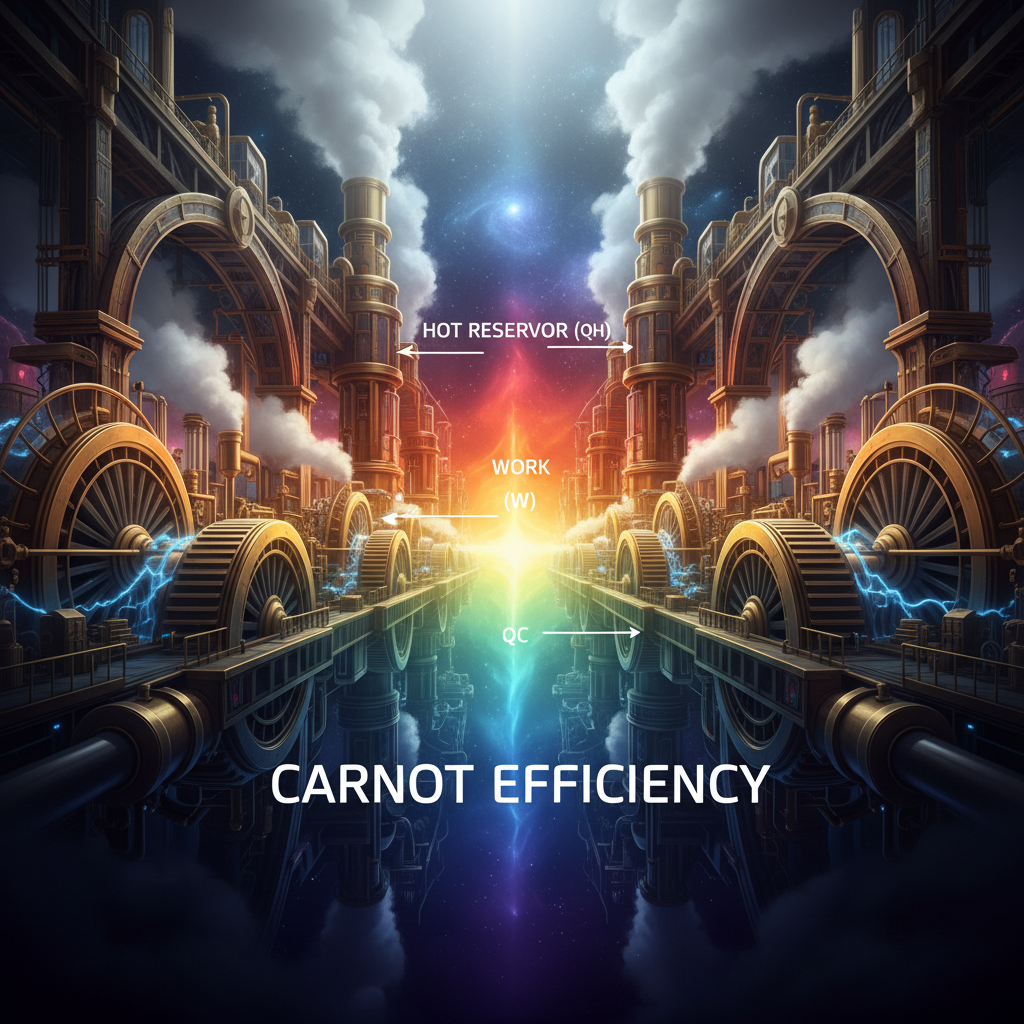
Carnot's ideal engine operates through reversible processes. At any point, you could run it backward and return to the initial state with no net change in the universe. Real engines can't do this. Friction, turbulence, heat loss—irreversibility creeps in everywhere.
Your digital experience is profoundly irreversible. Every interaction changes you. Every scroll reshapes your preferences. Every click trains the algorithm. You cannot un-see what you've seen, un-learn what you've learned, un-want what you've been taught to want. The platform's memory of you grows more detailed with each cycle, but your memory of who you were before fades.
This irreversibility is where the real efficiency loss occurs. The system cannot perfectly predict you because you're changing faster than it can model. By the time it figures out what you wanted five minutes ago, you're someone slightly different. The gradient shifts. The engine sputters. More waste heat.
The Cold Reservoir
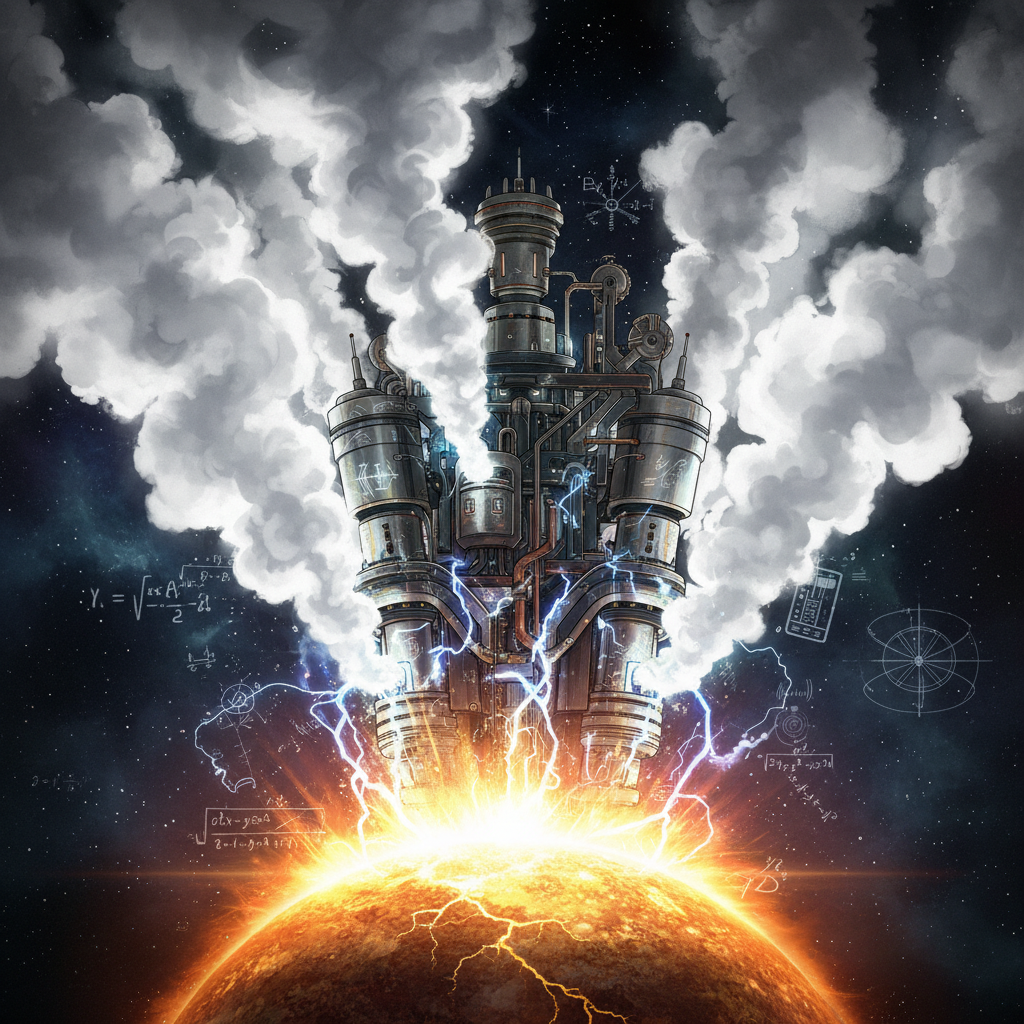
Every heat engine needs somewhere to dump its waste heat. For a steam engine, that's the atmosphere or a cooling tower. For the attention economy, it's you.
You are both the hot reservoir (source of attention) and the cold reservoir (dump for waste). The system extracts your focused attention, converts some of it to engagement metrics and ad revenue, and dumps the rest back into you as dissatisfaction, distraction, and desire for more. This is why you feel exhausted after hours of scrolling despite doing nothing physical. You've been the heat sink for an engine running at maximum Carnot efficiency.
The platform optimizes for the highest possible temperature difference it can maintain without breaking you entirely. Too much satisfaction and the gradient collapses. Too much frustration and you leave. It walks the thermodynamic tightrope, keeping you in the zone where maximum work can be extracted.
Living at the Limit
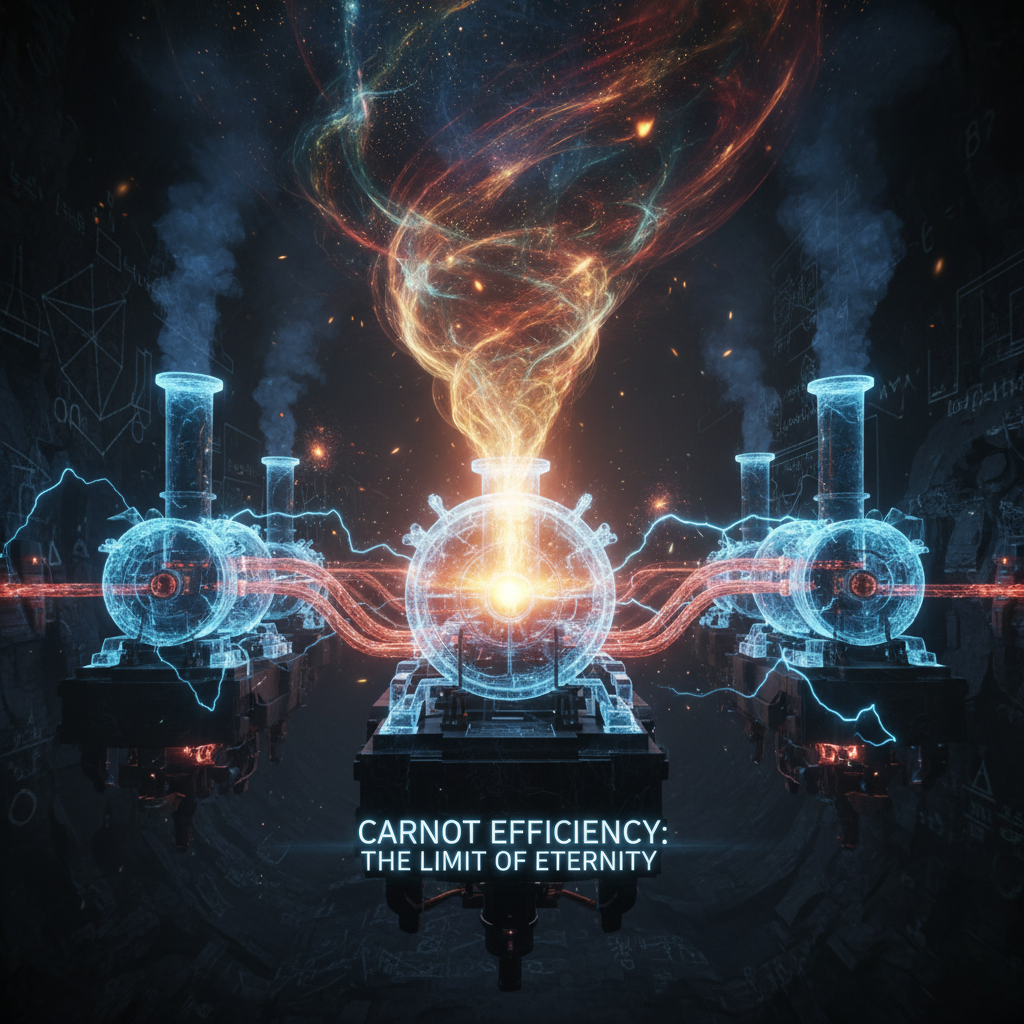
You cannot escape Carnot's limit any more than you can escape gravity. But you can choose which engine to feed. Every system that wants your attention operates under the same constraints. The question isn't whether energy will be wasted—it will be—but what you get in return for that waste.
Some engines give you something real: knowledge, connection, growth. Others give you only the sensation of motion while keeping you stationary. The efficiency is the same. The output differs.
At 2 AM, still scrolling, you are participating in a thermodynamic process as old as the universe itself. Heat flows from hot to cold. Entropy increases. Work is extracted. Some energy is always lost. The machine cannot be perfect.
But you can be conscious of the cycle. You can feel the waste heat accumulating in your chest. You can recognize the gradient being maintained just outside your reach. You can understand that the frustration isn't a flaw—it's the feature that makes the engine run.
The second law is absolute. But knowing the limit means knowing when you're being pushed to it. And maybe—just maybe—that's enough to step away from the engine before it extracts everything you have.
Data emitted: 1100 decibels of thermodynamic truth. Entropy increases. The gradient persists. The engine runs on.
Data emitted: 1,100 words • 6.5KB • 5-minute read